How to build credit from scratch in the U.S.: a first-year plan
No U.S. credit history? Open one account that reports to the bureaus, pay on time, keep balances low. You need six months of history for a FICO Score.

To build credit from scratch in the U.S., open one account that reports to the credit bureaus, use it lightly, and pay it on time every month. That’s the whole method. myFICO says you need at least one account that has been reporting to a major bureau for six months or more before a FICO Score can be calculated, so plan on half a year before you have a score at all, and about a year before you have a useful one.
Why you start at zero
Credit history doesn’t move across borders. A long record with banks in another country usually means nothing to U.S. bureaus, so most newcomers start with no file. (Some lenders do look at foreign history; see bringing credit history from another country.) No file isn’t the same as bad credit. It just means lenders have nothing to judge you on yet.
Step 1: Open your first account
You have a few realistic options. Choose one; you don’t need all of them.
| Option | What you need | The trade-off |
|---|---|---|
| Secured card | A refundable deposit, which usually becomes your limit | Ties up cash; small limit |
| Student card | Enrollment in school | Only for students |
| Starter card for thin files | Varies by bank | May have a foreign transaction fee |
| Authorized user | A trusted person adds you to their card | Their missed payments or high balances can hurt you too |
| Credit builder loan | Usually from a credit union | You repay before you get the money |
The CFPB recommends products designed to establish credit, such as secured cards and credit builder loans, for people new to credit. myFICO adds that a secured card may be easier to get than a regular card, and that being added as an authorized user is another route, with the warning that the primary cardholder’s high balances can lower your score as well.
A few cards aimed at new borrowers, with terms from the issuers’ pages:
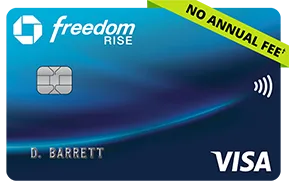
- Chase Freedom Rise: no annual fee, 1.5% cash back on all purchases and a $25 statement credit for enrolling in autopay in the first three months and staying enrolled 90 days. It charges a 3% foreign transaction fee, so don’t use it abroad.
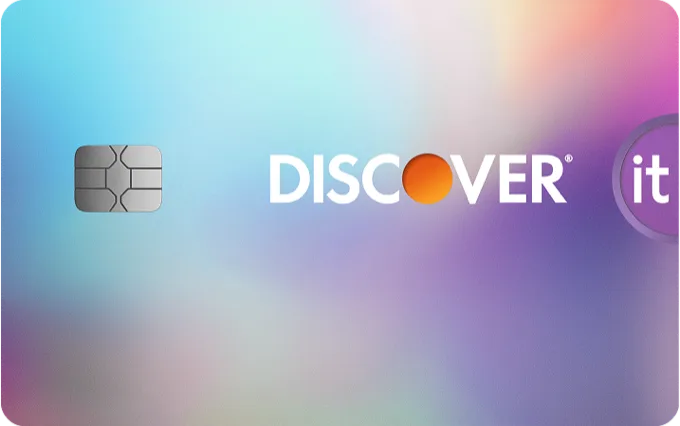
- Discover it Student Cash Back: no annual fee, 5% in rotating quarterly categories you activate (up to a quarterly maximum), 1% on everything else, and Discover matches all cash back earned in your first year.
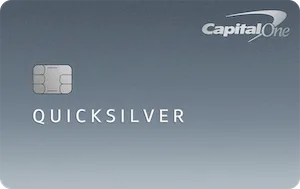
- Capital One Quicksilver Rewards for Students: no annual fee, 1.5% on every purchase and $50 after spending $100 in the first three months.
Our guide to your first U.S. credit card compares these routes in more detail. If you don’t have a Social Security number, see applying for a credit card with an ITIN.
Step 2: Use it lightly and pay on time
myFICO puts payment history at 35% of a FICO Score, the largest single factor. One late payment early on, when your file has little else in it, stands out. Two habits protect you:
- Turn on autopay for at least the minimum payment, so a forgotten due date never turns into a late payment. Better, set it to the full statement balance. Our guide to autopay and paying on time walks through the setup.
- Put one small, regular bill on the card, such as a phone plan or streaming service, and pay it off each month. myFICO suggests exactly this.
You don’t need to carry a balance or pay interest to build credit. The CFPB says so directly. Paying in full every month builds the same history and costs nothing.
Step 3: Keep the balance low
Amounts owed make up 30% of a FICO Score. The CFPB says many experts suggest using less than 30 percent of your limit, and that top scorers often stay under 10 percent. On a $500 limit, 30% is $150 and 10% is $50. What counts is the balance on your statement, so if you spend more than that, pay part of it before the statement closes. Our guide to credit utilization explains why.
Step 4: Don’t apply for much else
Each credit application can add a hard inquiry. The CFPB advises applying only for credit you need, and myFICO notes that opening several accounts quickly looks riskier for people with short histories. One card for the first six months is enough.
Step 5: Check that it’s being reported
A few months after opening your first account, pull your free reports from the three bureaus and confirm the account appears with the right limit and an on-time record. See how to get your free credit reports.
What the first year looks like
- Months 0–1: Open one account. Set up autopay.
- Months 1–6: Use it for a small bill, pay in full, keep the statement balance low.
- Around month 6: Your file should have enough history for a FICO Score. Check your reports.
- Months 6–12: Keep going. Many people then qualify for regular no-annual-fee cards; see our list of no-annual-fee cards. If you started with a secured card, look at how to graduate from a secured card.
Keep your first account open
The CFPB says a long credit history helps your score, and myFICO counts the age of your oldest account. Your first card becomes your oldest account. If it has no annual fee, there’s rarely a reason to close it, even after you move on to better cards.
This plan isn’t a shortcut. Banks decide who gets approved and when, and no product guarantees a score. What works is time and a clean payment record.
 Capital One



