Can you use your credit history from another country in the U.S.?
Foreign credit history doesn't transfer to the U.S. Two exceptions: Amex Global Transfer for existing cardmembers, and Nova Credit at lenders that use it.

Your credit history from another country doesn’t carry over to the U.S. Wells Fargo’s guide for newcomers says it plainly: you must build credit history here. There are two exceptions worth knowing. If you already hold an American Express card abroad, Amex’s Global Transfer process lets you apply for a U.S. card as an existing customer. And some lenders use Nova Credit, a service that turns a foreign credit report into something a U.S. lender can read. Both have limits, covered below.
Why your foreign credit history doesn’t count automatically
Arriving with a long, clean record from home can still leave you with no U.S. credit history at all. Wells Fargo lists three ways to start: reissue a card from your home country in the U.S. if the issuer operates here, get a secured card or loan, or have a U.S.-based family member with good credit co-sign.
The first of those is what Amex’s transfer process does.
Amex Global Transfer: for existing cardmembers
American Express lets people moving to the U.S. apply for a U.S. card using their existing Amex relationship. You apply online or by phone and give your existing account number.
Who qualifies, according to Amex’s page:
- Your current card must be issued by American Express. Amex cards issued by other banks and Amex Corporate Cards aren’t eligible.
- You must be the primary cardholder and have held the card for at least three months.
- The account must be open and in good standing. If you cancelled it, it must have been within the last three months.
What you’ll need: your Amex account number, a U.S. home address and phone number, U.S. bank account details, passport details, employment details, and an SSN or ITIN.
How it works:
- Amex says the process takes 7 to 10 working days and it may contact you within a week for ID or address documents.
- You can apply for only one U.S. card at first. Amex says you can apply for more once you’ve built local credit history.
- If you already have a U.S. credit file, Amex takes it into account.
- Membership Rewards points can move to the new card if it’s enrolled in Membership Rewards. If not, redeem them before cancelling the old card.
- Your old balance doesn’t transfer, and if you keep the old card, you keep paying its annual fee.
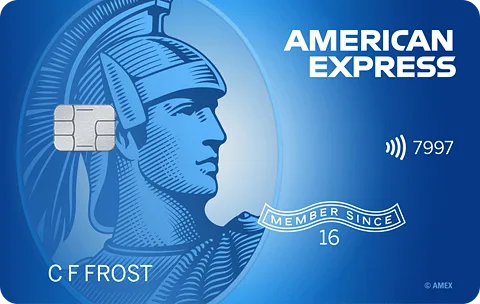
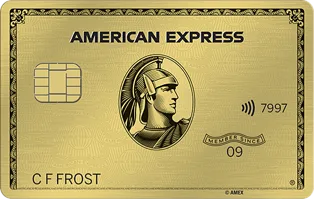
Amex’s page doesn’t say which U.S. card to pick. Since you get one card at first, choose the one you’ll keep. If you don’t want an annual fee, Blue Cash Everyday has none and earns 3% at U.S. supermarkets, on U.S. online retail purchases and at U.S. gas stations (each up to $6,000 a year, then 1%), though it charges a 2.7% foreign transaction fee. If your old card earned Membership Rewards and you want to keep those points, you’ll need a U.S. card in that program, such as American Express Gold.
Nova Credit: a translated credit report
Nova Credit is a company that sells lenders a product called Credit Passport. Its page describes the process: you follow country-specific steps to give permission, Nova retrieves your credit report from a bureau in your home country, and it converts the report into a U.S.-style equivalent, including a score, account history and inquiries, which goes to the lender and to you. Nova says its bureau partnerships cover more than 20 countries.
The catch is that you can’t use it on your own. It only works when the lender you’re applying to uses Nova Credit, and only for supported countries. American Express says it partners with Nova Credit, so some of its cards might let immigrants from certain countries apply with a foreign credit record. Amex doesn’t list the countries on the page we read. Nova’s site names Chase among its customers, but it doesn’t say which Chase products use it, so we can’t tell you whether a Chase card application will accept it.
What to do if neither applies
If you’ve never held an Amex card and your country isn’t supported, you’re starting from zero like any newcomer. The usual path:
- Get an SSN if you’re eligible, or an ITIN if you have a federal tax purpose. Our guide to applying with an ITIN lists which banks accept one.
- Apply for a secured card or a card built for thin files. Your first U.S. credit card compares the options.
- Pay on time and keep balances low for six to twelve months before applying for the next card.
Students should read credit cards for international students, and work-visa holders credit cards for H-1B visa holders. If you’re still abroad and hold a card issued by American Express, keep it open and paid on time: the transfer needs at least three months of cardholding and an account in good standing.