How to graduate from a secured credit card and get your deposit back
How to graduate from a secured credit card: which issuers upgrade you automatically, when the deposit comes back, and when to apply for a new card instead.

There are two ways to graduate from a secured credit card. The first is to let your issuer convert the card into a regular, unsecured one, which returns your deposit and keeps the account’s history. The second is to apply for a new unsecured card yourself. If your issuer offers conversion, wait for it and keep paying on time. If it doesn’t, or you want better rewards, apply for a new card once your history supports it, and decide separately what to do with the secured one.
What issuers say about upgrading a secured card
Each bank handles this differently, and none of the pages we read gives a fixed timeline.
| Issuer | What happens | What its page says about the deposit |
|---|---|---|
| Capital One (Platinum Secured) | Capital One periodically reviews your account and notifies you by mail if you’re eligible. You can’t request an upgrade. | Returned as a statement credit when the card is upgraded. |
| Discover (Discover it Secured) | With a positive track record, the card moves to Discover it Cash Back. | Returned, and the account becomes unsecured. |
| Bank of America (secured card) | Bank of America periodically reviews the account. | You may qualify to have the deposit returned. Not all customers will. The page doesn’t say the card converts. |
| U.S. Bank (secured card) | Upgrades only for account holders with a Social Security number. | ITIN holders can keep using the secured card. |
Capital One’s help center adds two details. You’ll hear about an upgrade by mail, so keep your address current. And because the deposit comes back as a statement credit, it first pays down whatever you owe; it doesn’t arrive as a check.
The Discover route has a specific destination: Discover it Cash Back, which has no annual fee, earns 5% in rotating quarterly categories you activate (up to a quarterly maximum) and 1% on everything else.
What helps you qualify
Issuers don’t publish their review formulas, but the factors behind a credit score are public. myFICO lists payment history at 35% of a FICO Score and amounts owed at 30%. In practice that means two habits:
- Pay every statement on time. Autopay for at least the minimum removes the risk of forgetting.
- Keep the reported balance low. The CFPB notes that many experts recommend using less than 30% of your limit. On a $200 secured limit, that’s a balance under $60 when the statement closes.
Capital One also says you can earn credit line increases on its secured cards based on payment history and creditworthiness, with no extra deposit. A higher limit makes the 30% target easier to hit.
Applying for a new unsecured card instead
You don’t have to wait for your issuer. After several months of on-time payments, you can apply elsewhere. To limit hard inquiries, check prequalification first where it’s offered. Capital One’s pre-approval page says checking your eligibility is a soft inquiry that doesn’t affect your credit score; accepting an offer triggers a hard inquiry. It also says you may not be eligible if you’ve applied for a Capital One card two or more times in the past 30 days.
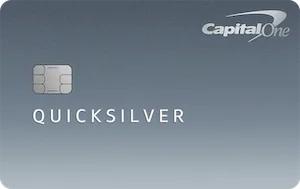
Common next steps from a secured card are no-annual-fee cash back cards, such as Capital One Quicksilver, which earns 1.5% on every purchase and charges no foreign transaction fee. Our list of no-annual-fee cards has more.
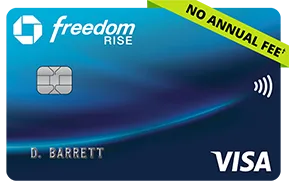
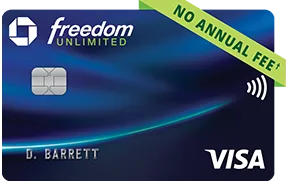
Some starter cards that aren’t secured have their own path upward. Chase says it evaluates Freedom Rise cardholders each year for an upgrade to Chase Freedom Unlimited; the account must be open at least 12 months, with a purchase in that period and on-time payments.
Should you close the secured card?
Closing returns your deposit. Capital One says that when a secured account is closed, the deposit is applied to your balance within 7 to 10 days and any excess is generally mailed to you by check after two billing cycles.
The cost is your credit history. Length of credit history is 15% of a FICO Score, and a secured card is often your oldest account. The CFPB advises keeping a long credit history. If the secured card has no annual fee (Capital One’s Platinum Secured has none), the better move is often to keep it open, put a small recurring bill on it, and wait for the issuer to convert it.
Close it if it charges an annual fee you don’t want to pay, or if you need the deposit back now and the issuer won’t convert the account.
A simple plan
- Pay on time and keep the balance under 30% of the limit from the first statement.
- Watch your mail and account messages for an upgrade notice.
- After six to twelve months, check prequalification for an unsecured card.
- Keep the secured card open unless it costs you a fee or you need the deposit.
If you’re still choosing your first card, read our list of first credit card mistakes before you start.
Cards in this article
 Capital One

Sources
- Capital One: Platinum Secured
- Capital One: Understanding secured cards
- Discover: Discover it Secured
- Bank of America: Secured credit card
- U.S. Bank: Can I upgrade my secured card without an SSN?
- Capital One: Pre-approval
- Chase Freedom Rise
- CFPB: How do I get and keep a good credit score?
- myFICO: What's in my FICO Scores?



