Credit card autopay: how to set it up so you never miss a payment
Credit card autopay explained: minimum, statement balance or fixed amount, which to pick, when to schedule it and what still causes late payments.
Credit card autopay is the simplest way to never miss a payment: the bank pulls the money from your checking account on a date you pick, whether or not you remember. Set it to the full statement balance if your checking account can cover it, and to at least the minimum if it can’t. Then keep enough money in the account and glance at each statement, because autopay fails quietly when either of those slips.
Why one missed payment matters
Payment history is 35% of a FICO Score, the largest single factor, according to myFICO. The CFPB says negative payment history can generally stay on your credit report for up to seven years. Chase’s guide on autopay notes that even one late payment could hurt your score. The CFPB’s own advice for keeping a good score includes setting up automatic payments or electronic reminders.
The three autopay options
Capital One’s help center describes the choices most issuers offer:
| Option | What gets paid | Interest | Best for |
|---|---|---|---|
| Minimum payment | The minimum due, which varies with your balance each month | You pay interest on the rest | A safety net if your income is irregular |
| Statement balance | Your total balance as of the statement date | None on purchases, if your card has a grace period | Anyone who can pay in full every month |
| Fixed amount | An amount you choose | Depends on whether it covers the full balance | Paying down a balance on a set budget |
Statement balance is the right default for most people. The CFPB explains that if your card has a grace period, you avoid interest on new purchases by paying the full balance by the due date. Pay less and you lose the grace period: interest applies to what’s left, and new purchases start accruing interest from the day you make them.
Minimum payment protects your credit record, not your wallet. It keeps you from being late, but any balance you carry costs interest.
Fixed amount needs watching. If your fixed amount is ever lower than the minimum due, make sure the difference gets paid by the due date. Check your issuer’s autopay terms for how it handles that case.
When to schedule it
Capital One asks you to pick a payment date on or before your due date. Chase notes that payments can take time to process, so schedule autopay early enough to post before the due date. Two simple choices:
- On the due date. Your money stays in checking as long as possible.
- A few days before the due date. It leaves time to fix a problem if a payment fails.
You can still pay by hand. Capital One says that for the minimum and statement balance options, a payment you make before autopay runs reduces the automatic payment. That’s useful if you pay down the card mid-month to keep your reported balance low.
What can still go wrong
Autopay isn’t a set-and-forget guarantee. The common failure points:
- Not enough money in checking. Chase warns that if the amount due changes and your account is short, you could trigger overdraft protection or fees. A month with a large purchase means a large statement balance.
- A new bank account. If you close or change the checking account, update autopay first.
- Not reading statements. Chase recommends reviewing your statement every month. Autopay will pay a fraudulent charge as readily as a real one.
- Assuming autopay starts immediately. Until you see the first automatic payment go through, pay the first bill by hand.
Some cards pay you to enroll
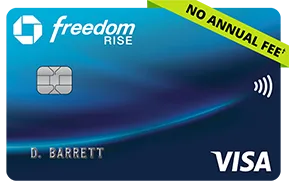
Card issuers want you on autopay too. Chase Freedom Rise, a starter card with no annual fee and 1.5% cash back, gives a $25 statement credit if you sign up for automatic payments within the first three months and stay enrolled for at least 90 days. If you already have the card, that’s $25 for a setting you should turn on anyway. See Chase Freedom Rise for its other terms, including a 3% foreign transaction fee.
A five-minute setup
- Log in to your card account and find autopay or automatic payments.
- Choose statement balance, or minimum if your cash flow is tight.
- Pick a date a few days before the due date.
- Link a checking account you won’t close soon.
- Turn on a balance or payment-due alert as a backup.
Autopay handles one of the first credit card mistakes, late payment. The others, such as running up a small limit or applying for several cards at once, still need your attention.