Credit cards for H-1B visa holders: how to get approved with no U.S. history
H-1B holders can get an SSN, so the hurdle is credit history, not the visa. Amex transfers, starter cards, secured cards and what H-4 spouses need.

H-1B visa holders can get credit cards on the same terms as anyone else, because H-1B status comes with work authorization and that makes you eligible for a Social Security number. The real hurdle is that your credit history from home doesn’t come with you. That leaves three practical routes: transfer an existing American Express relationship, start with a card built for thin credit files, or open a secured card. A good salary helps, but it doesn’t replace a U.S. credit history.
Can H-1B visa holders get an SSN?
The Social Security Administration’s operating manual lists H-1B among the classes of admission that are authorized to work as part of their status, without separate approval from the Department of Homeland Security. The same list includes L-1, O-1, TN and the E categories. In practice, you can apply for an SSN using your immigration documents as evidence of work authorization, and that number opens nearly every card application.
Spouses are different. SSA lists the H-4 spouse of an H-1B worker among those who need an Employment Authorization Document to work, and says an H-4 spouse without an EAD isn’t authorized to work. Without work authorization there’s no SSN for employment. An H-4 spouse may still qualify for an ITIN: the IRS issues them to the spouses and dependents of resident and nonresident aliens who have a federal tax purpose. SSA’s note on L-2, E-1 and E-2 spouses is different: it says they are authorized to work without specific DHS authorization.
Route 1: Transfer an American Express card
If you hold an American Express card issued in your home country, this is the most direct route to a regular U.S. card. Amex’s page for people moving to the U.S. sets these conditions:
- Your current card must be issued by American Express itself, not by another bank, and not a Corporate Card.
- You must be the primary cardholder and have held the card for at least three months.
- The account must be open and in good standing. If you already cancelled it, it must have been within the last three months.
- You can apply for only one U.S. card at first. Amex says you can apply for more once you’ve built local credit history.
You’ll need your existing account number, a U.S. home address and phone number, U.S. bank details, passport details, employment details, and an SSN or ITIN. Amex says the process takes 7 to 10 working days. Membership Rewards points can move to the new card if it’s enrolled in the program. Your old balance doesn’t move, and if you keep the old card, its annual fee continues.
Route 2: A starter card
If you don’t have an Amex card, look at cards designed for people new to credit:
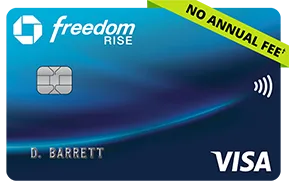
- Chase Freedom Rise: no annual fee, 1.5% on all purchases, and a $25 statement credit if you enroll in autopay in the first three months and stay enrolled 90 days. It charges a 3% foreign transaction fee, which matters if you buy flights home on it. Chase’s article on student cards says an existing Chase checking or savings account with at least $250 “may sometimes improve” your chances of approval. If you’ve already opened a Chase checking account for your paycheck, that’s a point in your favor.
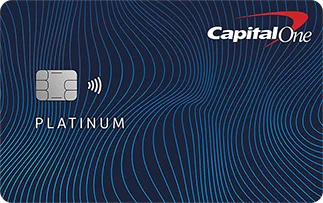
- Platinum from Capital One: no annual fee and no foreign transaction fee. It earns no rewards.
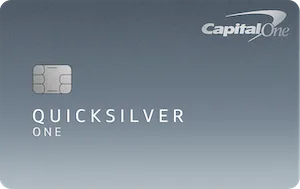
- QuicksilverOne: 1.5% on every purchase for $39 a year.
Before applying to Capital One, use its pre-approval tool. Capital One says checking eligibility is a soft inquiry that doesn’t affect your score; only accepting an offer triggers a hard inquiry.
Route 3: A secured card
If you’re turned down, a secured card asks for a deposit instead of a credit history. Capital One’s Platinum Secured takes a refundable deposit of $49, $99 or $200, has no annual fee or foreign transaction fee, and Capital One says no credit score is required to apply. Capital One says it periodically reviews secured accounts for an upgrade to a regular card.
What about your credit history from home?
Wells Fargo’s guide for newcomers says your home-country history doesn’t carry over and you must build it in the U.S. There are limited exceptions. American Express says it partners with Nova Credit, which translates an international credit profile into a U.S. equivalent, so some Amex cards may let applicants from certain countries apply with their foreign credit record. Amex doesn’t list the countries on the page we read.
Getting the first year right
- Space out applications. Wells Fargo advises against several credit applications in a short time.
- Report your income accurately. Citi notes applicants list gross or net annual income. Your salary is an asset; use it.
- Put the card on autopay. Our guide to credit card autopay covers the settings.
For a broader comparison of secured, student and starter cards, see your first U.S. credit card. If you or your spouse will apply with an ITIN, read how to apply for a credit card with an ITIN.
Cards in this article
 Capital One
Sources
- SSA POMS RM 10211.420: Employment authorization for non-immigrants
- IRS: Individual Taxpayer Identification Number (ITIN)
- American Express: Moving to the United States
- American Express: Can you get a credit card without an SSN?
- Capital One: Pre-approval
- Capital One: Platinum Secured
- Chase: Does Chase offer a student credit card?
- Chase Freedom Rise
- Wells Fargo: How to build credit when new to the U.S.
- Citi: Requirements for a credit card



