Credit cards for international students in the U.S.: what you need to apply
Credit cards for international students: how F-1 students get an SSN, when an ITIN works, which student cards to look at, and what banks ask for.

International students can get U.S. credit cards, but the application usually stops at one field: Social Security number. Most F-1 students become eligible for an SSN once they have an on-campus job. Without one, an ITIN can work at some banks, but you can only get an ITIN if you have a U.S. tax reason. Once you have either number, student cards and starter cards are the realistic options, since you won’t have a U.S. credit history yet.
Step 1: Get an SSN or an ITIN
SSN through an on-campus job. The Social Security Administration’s operating manual says F-1 students are authorized for general on-campus employment as part of their status. To get an SSN for that job, SSA wants evidence of your status, your Form I-20, and proof of the on-campus job: either a letter from your Designated School Official plus a recent pay slip or employer letter, or a single employer letter signed off by the DSO. New students can start on-campus work up to 30 days before classes begin, so SSA notes an SSN can be issued in the summer before your first term.
ITIN if you have a tax purpose. The IRS issues ITINs for federal tax purposes only, to people who need a taxpayer number but can’t get an SSN. You apply with Form W-7. An ITIN doesn’t authorize you to work, and the IRS ties eligibility to having a federal tax purpose, so you can’t get one just to apply for a card. If you receive a taxable scholarship or have to file a return, you may qualify.
Step 2: Know what else banks ask for
A number isn’t the only requirement. Citi’s page on card requirements lists the basics most banks use:
- Age: at least 18 to apply in your own name.
- Income: applicants aged 18 to 20 generally need income of their own. Those 21 and older can usually count household income they have reasonable access to.
- Address: a physical U.S. address where you live, not just a P.O. box.
Discover’s student page adds that applicants typically need proof of enrollment and must show income, though a job isn’t required. Chase, which has no separate student card, says proof of enrollment isn’t a requirement for its entry-level cards.
Step 3: Pick a card you can get
With no U.S. credit history, you’re looking at cards designed for new borrowers. Capital One lists both of its student cards among the cards you “may be able to get with an ITIN,” and says the same about its Platinum Secured card.
| Card | Annual fee | What it earns | Bonus | Foreign transaction fee |
|---|---|---|---|---|
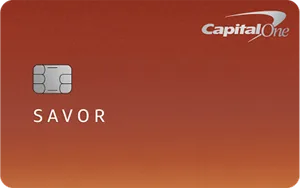
| Capital One Savor Student Rewards | $0 | 3% at grocery stores, on dining, entertainment and popular streaming; 1% elsewhere | $50 after $100 in 3 months | None |
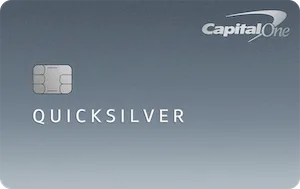
| Capital One Quicksilver Rewards for Students | $0 | 1.5% on every purchase | $50 after $100 in 3 months | Not stated in our data |
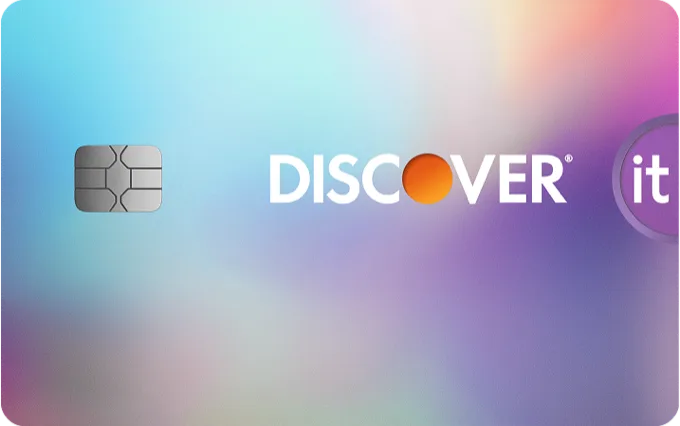
| Discover it Student Cash Back | $0 | 5% in rotating categories you activate, up to a quarterly maximum; 1% elsewhere | All cash back matched at the end of year one | Not stated in our data |
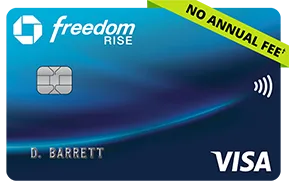
| Chase Freedom Rise | $0 | 1.5% on all purchases | $25 credit for enrolling in autopay in the first 3 months (stay enrolled 90 days) | 3% |
A few points that matter for international students in particular:
- Discover says no credit score is required to apply for its student cards, though it may use one if available.
- Chase Freedom Rise lists “SSN and/or ITIN” in its application steps, but Chase’s article on student cards says applicants generally need an SSN. The two pages don’t agree, so confirm on the application.
- Foreign transaction fees matter if you’ll pay for flights home, shop on overseas sites or spend over breaks abroad. Savor Student charges none. Freedom Rise charges 3%. For the other two, check the card’s terms before you use it outside the U.S.
If you can’t get either number yet
American Express suggests two routes. You can become an authorized user on a card held by a family member or friend who has an SSN or ITIN; their account history can help you start building credit, but their missed payments can hurt you too. And some specialty cards accept a passport in place of an SSN. We don’t list specific passport-based cards because we haven’t verified their terms.
If you already hold an American Express card issued in your home country, Amex has a transfer process for people moving to the U.S. Our New to the U.S. guide explains the requirements.
Use the first card carefully
A student card’s limit is usually small, so it’s easy to report a high balance by accident. Pay on time, keep the balance under 30% of the limit when the statement closes, and apply for one card at a time. Our list of first credit card mistakes covers the rest. If you start with a secured card instead, see how to graduate from a secured card.
Cards in this article
 Capital One
Sources
- SSA POMS RM 10211.245: On-campus employment for an F-1 student
- IRS: Individual Taxpayer Identification Number (ITIN)
- Capital One: What is an ITIN?
- Capital One: Student credit cards
- Discover: Student credit cards
- Chase: Does Chase offer a student credit card?
- Chase Freedom Rise
- Citi: Requirements for a credit card
- American Express: Ways to get credit cards for international students



