Student credit cards compared: Discover, Capital One and Chase
Student credit cards compared: Discover's first-year Cashback Match, Capital One Savor Student's 3% and $50 bonus, and Chase Freedom Rise.

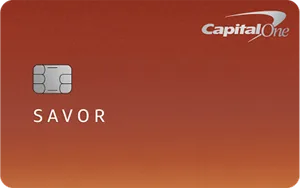
Of the student credit cards from the big issuers, Capital One Savor Student pays the most on the typical student budget in our example below: 3% at grocery stores and on dining, with a $50 bonus and no foreign transaction fee. Discover’s two student cards earn less per dollar, but Discover matches all the cash back you earn in your first year, which can put them ahead in year one. Quicksilver Student is the pick if you want a flat 1.5% on everything. Chase has no student card; its Freedom Rise is the closest option.
All five have no annual fee.
Student credit cards at a glance
| Card | What it earns | Welcome offer | Foreign transaction fee |
|---|---|---|---|
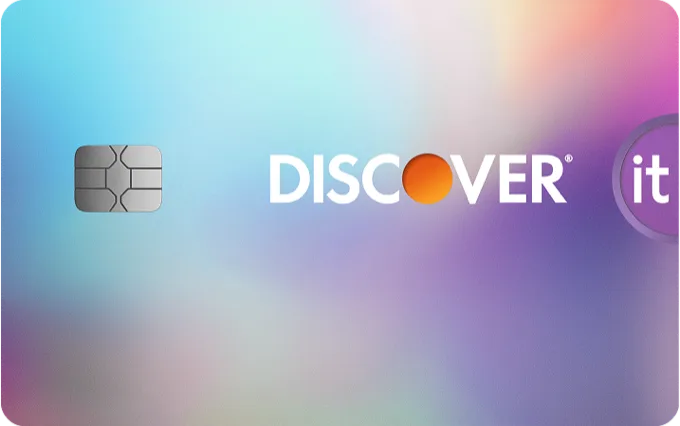
| Discover it Student Cash Back | 5% in rotating quarterly categories you activate, up to a quarterly maximum; 1% elsewhere | Cashback Match: all cash back from year one, matched | Not stated in our data |
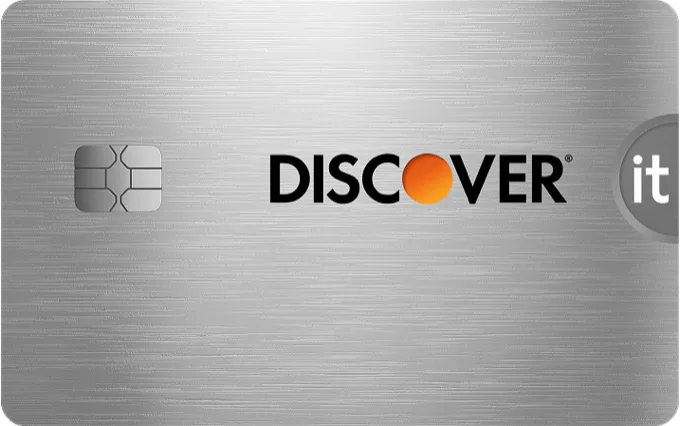
| Discover it Student Chrome | 2% at gas stations and restaurants on up to $1,000 in combined purchases a quarter; 1% elsewhere | Cashback Match | Not stated in our data |
| Capital One Savor Student Rewards | 3% at grocery stores, on dining, entertainment and popular streaming; 8% on Capital One Entertainment; 5% on hotels, vacation rentals and rental cars through Capital One Travel; 1% elsewhere | $50 after $100 in 3 months | None |
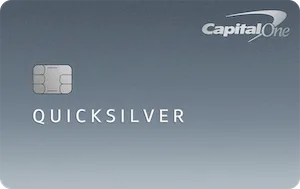
| Capital One Quicksilver Rewards for Students | 1.5% on every purchase | $50 after $100 in 3 months | Not stated in our data |
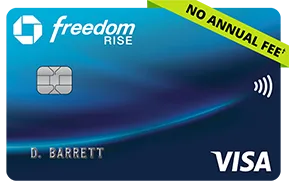
| Chase Freedom Rise | 1.5% on all purchases | $25 credit for enrolling in autopay in the first 3 months and staying enrolled 90 days | 3% |
Capital One’s student page notes that Savor Student’s grocery rate excludes superstores such as Walmart and Target.
What you’d earn: a worked example
Take a student who spends $300 a month: $100 at grocery stores, $100 at restaurants and $100 on everything else. That’s $3,600 a year.
| Card | Year one | Year two onward |
|---|---|---|
| Savor Student | $84 in cash back + $50 bonus = $134 | $84 |
| Discover it Student Chrome | $48, doubled by Cashback Match = $96 | $48 |
| Quicksilver Student | $54 + $50 bonus = $104 | $54 |
| Freedom Rise | $54 + $25 autopay credit = $79 | $54 |
| Discover it Student Cash Back | At least $36, doubled = $72, more when the 5% categories match your spending | At least $36 |
How the numbers work: Savor Student pays 3% on the $200 of groceries and dining and 1% on the rest, or $7 a month. Chrome pays 2% on restaurants and 1% on everything else, including groceries, or $4 a month. The flat-rate cards pay 1.5% on all $300, or $4.50 a month. Discover it Student Cash Back depends on its quarterly categories, which change every three months; the figure above assumes none of your spending lands in them.
In our view, Savor Student wins for most students who buy their own food. Discover’s match narrows the gap in year one and helps most if you spend at gas stations or in the 5% categories. If your spending is spread evenly and you don’t want to think about categories, Quicksilver Student’s 1.5% is simpler.
Who can get each card
- Discover: You must be at least 18 and meet income requirements, though a job isn’t required. Applicants typically need proof of enrollment. Discover says no credit score is required to apply for its student cards, though it may use one if available.
- Capital One: Both student cards are listed for “Fair Credit” on Capital One’s student page. Capital One also lists Savor Student and Quicksilver Student among the cards you may be able to get with an ITIN.
- Chase: Chase has no student application. Students apply for entry-level cards such as Freedom Rise, and Chase says proof of enrollment isn’t required. It also says an existing Chase checking or savings account with at least $250 may sometimes improve your chances.
Which one should you get?
- You buy groceries and eat out: Savor Student. It’s also the only one of the five we can confirm charges no foreign transaction fee, which matters for flights home and trips abroad.
- You drive or eat out more than you cook: Discover it Student Chrome, at least for the first year.
- You’ll track a quarterly calendar: Discover it Student Cash Back. Activate each quarter or you earn 1%.
- You want one rate for everything: Quicksilver Student.
- You already bank with Chase: Freedom Rise. Chase says it reviews cardholders each year for an upgrade to Chase Freedom Unlimited once the account has been open at least 12 months, with a purchase in that time and on-time payments. Avoid it abroad because of the 3% fee.
You can line up any two in our card comparison tool.
Before you apply
Student cards come with small limits, so keep the balance under 30% of the limit when the statement closes and pay in full. If you’re an international student, read credit cards for international students first, since the SSN or ITIN question comes before the card choice. If you aren’t enrolled, or you were turned down, your first U.S. credit card covers secured and starter cards.
 Capital One