Does banking with Chase, Bank of America or U.S. Bank help you get their credit card?
Does a bank relationship help card approval? Chase says a $250 account may sometimes help; BofA and U.S. Bank pay more rewards but promise nothing.

A bank relationship can help with credit card approval, but only a little, and no bank promises it. Chase says a checking or savings account with at least $250 “may sometimes improve” your chances. Bank of America says its loyalty status doesn’t guarantee approval. Where a relationship clearly pays is after approval: Bank of America and U.S. Bank both raise the rewards rate on some cards for customers who keep larger balances with them. Your credit history and income still decide whether you get the card.
Chase: an account may help, sometimes
Chase is the most direct of the three. Its article on student cards says an existing relationship, such as a checking or savings account with at least $250, may sometimes improve your chances of approval for a card. Its guide to approval odds adds that a checking account is often needed to make card payments, so having one before you apply may help, and that checking customers may be more likely to receive prequalified card offers. The same guide says direct deposit isn’t a requirement for approval, that your credit score is one of the most important factors, and that a prequalified offer doesn’t mean automatic approval.
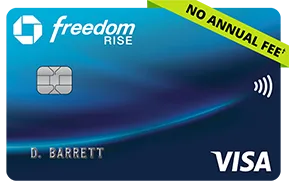
For a newcomer, this matters most with Chase Freedom Rise, Chase’s card for people new to credit: no annual fee, 1.5% on all purchases, and a $25 statement credit for enrolling in autopay in the first three months and staying enrolled 90 days. Chase says a banker at a branch can help you apply for it. If you’ve already opened a Chase checking account, applying for Freedom Rise from that relationship costs you nothing extra.
Bank of America: higher rewards, no approval promise
Bank of America’s BofA Rewards program ties card rewards to how much you keep with the bank. You need an eligible Bank of America personal checking account to join. Tiers are set by your combined average balance over three months, and each tier adds a bonus to card rewards on eligible cards:
| Tier | Combined 3-month average balance | Credit card rewards bonus |
|---|---|---|
| Member | No minimum | 10% |
| Preferred Plus | $30,000+ | 25% |
| Preferred Honors | $100,000+ | 50% |
| Premier | $1,000,000+ | 75% |
The page is explicit on approval: BofA Rewards status “doesn’t guarantee approval” for lending and credit products, and the tier benefits apply only if you’re approved.
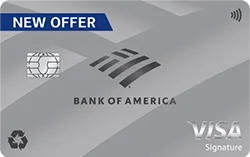
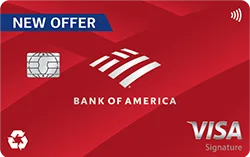
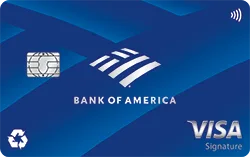
Here’s what the bonus means in practice. Bank of America Unlimited Cash Rewards earns 1.5% on all purchases with no annual fee. If the card is eligible for your tier’s bonus, a 25% bonus raises that to 1.875%, and a 75% bonus to 2.625%. The same logic applies to the 3% choice category on Customized Cash Rewards and the 1.5 points per dollar on Travel Rewards. Check Bank of America’s terms for which cards and categories qualify.
U.S. Bank: Smartly pays more with Smartly Savings
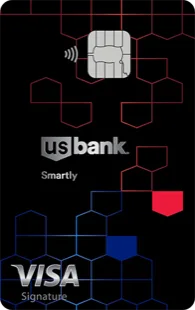
U.S. Bank Smartly earns 2% cash back on every purchase with no annual fee. If you also have a U.S. Bank Smartly Savings account and qualifying balances, the rate rises:
- 2.5% total with a qualifying balance of $10,000 to $49,999
- 3% total with $50,000 to $99,999
- 4% total with $100,000 or more
The higher rates apply to up to $10,000 in eligible net purchases each billing cycle; spending beyond that earns 2%. The card charges a 3% foreign transaction fee. The card page describes the rewards bonus, not any effect on approval.
Should you open a bank account to get a card?
Open one if you need a checking account anyway. You’ll need a bank account to pay your card from. In our view, if you’re new to the U.S., opening checking at a bank that also issues starter cards is a sensible first step, and Chase’s own pages suggest it can help a little there.
Don’t move savings just to improve your approval odds. None of these banks says that a large balance gets you approved. Move money for the rewards bonus only if the numbers work. At U.S. Bank, the jump from 2% to 2.5% on $2,000 a month of spending is $10 a month, or $120 a year, for keeping at least $10,000 in qualifying balances there. Compare that with what the same $10,000 earns in interest elsewhere.
A better way to test your odds
Prequalification tools tell you more than a bank relationship does. Capital One says checking eligibility on its pre-approval page is a soft inquiry that doesn’t affect your credit score, and only accepting an offer creates a hard inquiry.
If you’re starting from zero, the order still matters more than the bank: one first card, on-time payments, low balances, then the next card. Our guide to your first U.S. credit card compares the starting options, and how to graduate from a secured card covers the step after that.
 U.S. Bank



