Paying taxes with a credit card: IRS processor fees and when it pays off
The IRS takes card payments through two processors charging 1.75% or 1.85%. When paying federal taxes with a credit card earns more than the fee costs.
You can pay federal taxes with a credit card through one of two IRS-approved processors, but you pay a fee for it: 1.75% at Pay1040 or 1.85% at ACI Payments, each with a $2.50 minimum. No part of that fee goes to the IRS. Paying taxes with a credit card makes sense in two cases: your card earns more than the fee, or the payment helps you reach a welcome bonus. Paying from your bank account through IRS Direct Pay is free.
IRS card processors and their fees
The IRS lists these processors and fees:
| Processor | Credit card | Debit card | Commercial card | Digital wallets |
|---|---|---|---|---|
| Pay1040 | 1.75% ($2.50 minimum) | $2.15 | 2.89% ($2.50 minimum) | PayPal, Click to Pay |
| ACI Payments | 1.85% ($2.50 minimum) | $2.10 | 2.95% ($2.50 minimum) | PayPal, Venmo, Click to Pay |
The IRS says plainly that no part of the fee goes to the IRS. The processor keeps it. Pay1040’s credit card fee is the lower of the two, so on most personal credit card payments it’s the one to use.
Does paying taxes with a credit card earn more than the fee?
Only when your card earns more than 1.75%. Here’s a $5,000 tax bill paid through Pay1040 (fee: $87.50):
| Card | Rewards rate | Rewards on $5,000 | After the $87.50 fee |
|---|---|---|---|
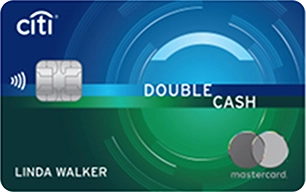
| Citi Double Cash | 2% (1% when you buy, 1% as you pay) | $100 | +$12.50 |
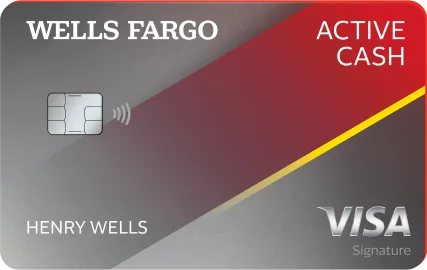
| Wells Fargo Active Cash | 2% cash rewards | $100 | +$12.50 |
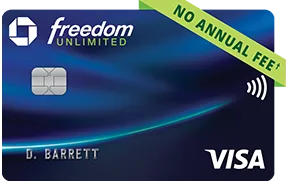
| Chase Freedom Unlimited | 1.5% on other purchases | $75 | −$12.50 |
| A card earning 1x worth 1 cent | 1% | $50 | −$37.50 |
A 2% card nets about $12.50 on $5,000. That’s a small gain, and it disappears if you carry the balance for even part of a month. Citi pays the second 1% on Double Cash only as you pay the bill. A 1.5% card or a 1x card loses money. Our flat-rate card list shows which cards earn 2% or more on everything.
When a welcome bonus makes it worthwhile
The math changes if the tax payment helps you hit a spending requirement. Wells Fargo Active Cash offers $100 after $500 in purchases in the first three months, and Chase Freedom Unlimited offers $200 after $500 in purchases in the first three months. A $500 tax payment through Pay1040 costs $8.75 in fees. If it’s the payment that gets you over the line, the bonus dwarfs the fee.
Before counting on this, read the card’s terms to confirm what counts as a purchase toward the bonus, and make sure you could pay the card off in full when the statement arrives. Our guide to welcome bonuses explains how spending requirements work.
Rules to know before you pay
- Frequency limits. The IRS caps card payments by type: two per year for Form 1040 current tax due, two per quarter for 1040-ES estimated tax, two per year for a Form 4868 extension and two per month for an installment agreement.
- Not for federal tax deposits. Businesses can’t use cards for federal tax deposits.
- Fees can be deductible for businesses. The IRS says card processing fees are tax deductible for businesses.
- Different fees at e-file time. If you pay by card while e-filing through tax software, the IRS says different card fees apply.
- No voucher needed. You don’t mail a payment voucher with a card payment.
- Cancellations go to the processor. To cancel, contact the processor, not the IRS.
- It shows as “United States Treasury Tax Payment” on your card statement.
When not to pay taxes with a credit card
Skip it if you can’t pay the card bill in full. If you carry the balance, you pay interest on it and can lose your grace period on new purchases. At a 24% APR, one month of interest on $5,000 is about $100, which wipes out a 2% card’s rewards on its own. Our guide to what APR means shows how fast it adds up.
Skip it, too, if your card earns 1.5% or less on general purchases and you aren’t chasing a bonus. In that case, IRS Direct Pay from your bank account is free and does the same job.
Should you do it?
Pay by card if you have a card that earns 2% or more on everything, or if the payment completes a welcome bonus, and you’ll pay the statement in full. Otherwise use Direct Pay and keep the fee.
 Citi