Does gas at Costco or Sam's Club count as gas on your credit card?
Gas at warehouse clubs often earns only 1% on gas rewards cards. Which issuers exclude it, why the pump code matters, and the card that pays 5% at Costco.
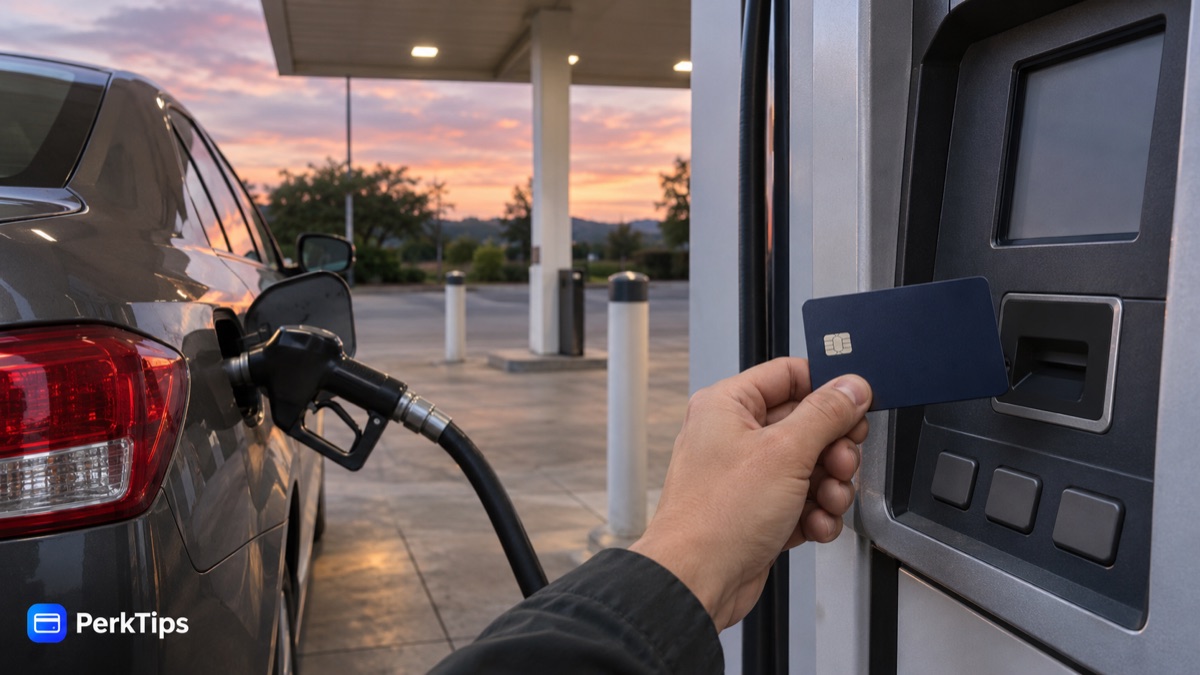
Gas bought at a warehouse club often doesn’t count as gas on a rewards card. American Express says outright that superstores, supermarkets and warehouse clubs that sell gasoline are not gas stations, so the Blue Cash Preferred® Card from American Express pays 1% at a warehouse club’s pump instead of 3%. U.S. Bank pays 1% on gas at discount stores, wholesale clubs and grocery stores. The clear exception is the Costco Anywhere Visa® Card by Citi, which pays 5% on gas at Costco. Other issuers don’t always say, so check your card’s terms before you fill up.
Why warehouse club gas can miss the gas bonus
Two separate things decide whether a fuel purchase earns a gas bonus: how the purchase is coded, and how your issuer treats the merchant.
The code. Visa’s merchant manual requires a merchant that runs automated fuel dispensers, the pay-at-the-pump kind, to use code 5542 for those sales, even if it sells other goods. Traditional service stations use 5541. So a pump at a warehouse club can carry a fuel code.
The merchant. Some issuers go further than the code and exclude fuel sold by merchants whose main business isn’t gas. That is how a pump sale with a fuel code can still earn the base rate. Amex’s terms state that rule; U.S. Bank’s terms say the same for its gas category.
What each issuer says
These are the published rules at the time of writing.
| Card | Gas rate | Warehouse club gas |
|---|---|---|
| Costco Anywhere Visa® Card by Citi ($0) | 5% on gas at Costco, 4% on other gas and EV charging, combined $7,000 a year, then 1% | Earns 5% |
| Blue Cash Preferred® Card from American Express ($95) | 3% at U.S. gas stations | Not a gas station: earns 1% |
| U.S. Bank Cash+® ($0) | 2% if you choose gas as your everyday category | Gas at discount stores, wholesale clubs and grocery stores earns 1% |
| Wells Fargo Autograph® ($0) | 3x on gas and transit | Not addressed; gas defined as gas stations, automated fuel dispensers and EV charging stations |
Chase
Chase’s Rewards Category FAQ defines gas stations as merchants that sell automotive gasoline at the pump or inside, and excludes merchants that don’t specialize in selling it, giving truck stops, boat marinas, oil and propane distributors and home heating companies as examples. Its wholesale club category, used on cards and promotions that reward warehouse clubs, separately excludes gas and fuel. The FAQ doesn’t say directly whether a warehouse club’s own fuel station counts in the gas category. If you rely on a Chase card for gas, check how a warehouse club fill-up posts on your statement before making it a habit.
Citi
The Costco Anywhere Visa is built for this. Gas at Costco earns 5%, the top rate on the card, and other gas stations and EV charging earn 4%. The two share a $7,000 annual cap, after which gas earns 1%. Costco purchases other than gas earn 2%.
Worked example: $150 a month at the warehouse club pump
That’s $1,800 a year.
- Costco Anywhere Visa: 5% = $90 a year at Costco.
- Blue Cash Preferred: 1% = $18, because Amex doesn’t treat the club as a gas station.
- Citi Double Cash: 2% = $36, since a flat-rate card doesn’t care how the merchant is coded.
If you buy gas at a warehouse club and your gas card excludes it, a flat-rate card beats it at the pump. If that club is Costco, the Costco card beats both.
Gas bought at a supermarket
Supermarket fuel stations are a separate case, and the answer depends on the issuer:
- Amex: supermarkets that sell gasoline are not gas stations, so supermarket fuel earns 1% on the Blue Cash Preferred. It also doesn’t count toward the 6% supermarket rate.
- U.S. Bank: gas at grocery stores earns 1% on the Cash+.
- Chase: the grocery category excludes purchases at gas stations run by merchants that also operate grocery stores. It doesn’t say whether those purchases earn in the gas category instead.
How to check your own card
- Read the gas definition in your rewards terms. Look for the words “superstores,” “warehouse clubs,” “wholesale clubs” or “merchants that do not specialize in” fuel.
- Make one test purchase and check what it earned. Look at the points or cash back posted for that line on your statement or in the app.
- Remember the code is only half of it. Visa requires pay-at-the-pump sales to carry the fuel dispenser code, but the issuer’s own merchant rules still decide whether that sale earns the gas bonus.
For more cards that pay well on fuel, see our best gas cards. For everything else you buy at the warehouse, our guide to the best cards for Costco covers the options, and our explainer on why Walmart and Target don’t count as groceries explains the same coding issue inside the store.
 Citi
 U.S. Bank