EIN or SSN on a business credit card application: which to use
Use your EIN if you have one; if not, most business card applications accept your SSN. Either way the issuer checks your personal credit.

On a business credit card application, enter your Employer Identification Number (EIN) if your business has one. If it doesn’t, most small business cards let you enter your Social Security number (SSN) in its place, which is the normal route for sole proprietors and freelancers. What changes less than people expect is the credit check: with either number, the issuer usually looks at your personal credit and asks you to be personally responsible for the debt.
What is an EIN, and do you need one?
An EIN is a nine-digit federal tax ID that the IRS assigns to businesses. The IRS says you need one if you:
- have employees;
- pay employment, excise, or alcohol, tobacco and firearms taxes;
- withhold tax on non-wage income paid to a non-resident alien; or
- operate a partnership, corporation or LLC, among other entities.
A sole proprietor with no employees often doesn’t need one for federal tax purposes. The IRS says you can still request one for banking or state tax purposes.
Getting one is free. The IRS online tool issues the number at the end of a single session, and the IRS warns about websites that charge for it. To use the online tool, the responsible party needs an SSN or an Individual Taxpayer Identification Number (ITIN). If you file taxes with an ITIN, see our guide to applying for a credit card with an ITIN.
Can you get a business credit card without an EIN?
Yes, in most cases. Chase’s application guidance says plainly: if you don’t have an EIN, use your SSN. Chase also says you don’t need a formal business name; a sole proprietor can enter their own name as the business name and a home address as the business address. A new business can enter $0 for annual revenue.
The tax ID field is one of several. Expect to fill in:
- business name, address and phone;
- business type (sole proprietorship, LLC, corporation);
- EIN or SSN;
- annual business revenue and years in business;
- number of employees (“one” if it’s just you);
- your personal income and details, because the card is usually in your name too.
Does using an EIN keep your personal credit out of it?
Usually not. Chase says most business cards require your SSN and a personal guarantee, and that the application leads to a hard inquiry on your personal credit report. That’s true even if you also give an EIN. Cards that accept an EIN alone exist, but Chase describes them as rare and mostly corporate cards that require annual revenue in the millions.
A personal guarantee means you are liable for the balance if the business doesn’t pay. Chase notes that you may have to use personal assets to cover unpaid business card debt.
After the first inquiry, Chase says a business card account is typically separate from your personal credit, so its balance and payments may not show up on your personal credit report. That depends on the issuer’s reporting policy; ask before you apply if it matters to you. Our guide to hard and soft credit inquiries explains what the inquiry itself does.
Which number should you use?
| Your situation | What to enter |
|---|---|
| Sole proprietor, no EIN | Your SSN |
| Sole proprietor with an EIN | Your EIN, plus your SSN where the form asks for the owner’s details |
| LLC, partnership or corporation | The business’s EIN, plus your SSN as the owner or officer |
| No SSN, file with an ITIN | Ask the issuer before you apply whether it accepts an ITIN |
The IRS also says the business name you enter for an EIN must follow its formatting rules. Keep the name on your card application consistent with your tax records, so the issuer can verify it.
Which cards does this apply to?
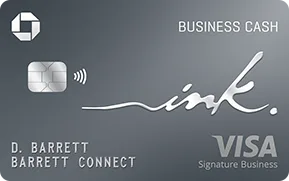
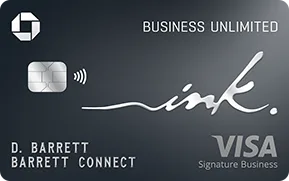
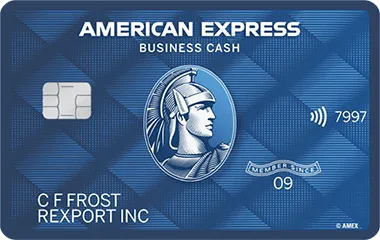
These are the no-fee small business cards most applicants start with. The Ink Business Cash pays 5% on the first $25,000 a year at office supply stores and on internet, cable and phone. The Ink Business Unlimited pays 1.5% on everything. The American Express Blue Business Cash pays 2% on the first $50,000 a year, then 1%. Check each application’s tax ID and guarantee terms before you submit. Our business card list compares the others.
The short version
Use the EIN if your business has one, and your SSN if it doesn’t. Getting an EIN only to apply for a card won’t spare you the personal credit check or the guarantee. If you’ll hire employees or form an LLC soon, get the free EIN from the IRS then, and ask your issuer how to update the account.
Cards in this article
Sources
- IRS: Employer identification number
- IRS: Get an employer identification number
- Chase: Can you get a business credit card without an EIN?
- Chase: How to get a business credit card with an EIN only
- Chase: How to fill out a business credit card application
- Chase: What is a personal guarantee on a credit card?
- American Express: Blue Business Cash Card



