Can a sole proprietor or side hustle get a business credit card?
Yes. Freelancers, gig workers and sole proprietors can apply with their SSN and own name, even with $0 revenue. What issuers ask and what you agree to.

Yes, a sole proprietor can get a business credit card, and so can a freelancer, gig worker or someone with a side business. You don’t need an LLC, a registered business name or an Employer Identification Number (EIN). Chase’s application guidance says to use your own name as the business name and your Social Security number (SSN) as the tax ID, and to enter $0 for revenue if you haven’t earned any yet. Approval still depends on your personal credit, and you’ll be personally responsible for the balance.
Who counts as a business?
The IRS defines a sole proprietor as someone who owns an unincorporated business by themselves, and says sole proprietors report business income on Schedule C with Form 1040.
Chase’s guidance says anyone who sells goods or services for a profit may be eligible for a business card, including:
- freelancers and independent contractors: writers, designers, translators, photographers;
- gig workers: rideshare and delivery drivers, pet sitters, online tutors;
- sole proprietors: personal trainers, hair stylists, consultants, online resellers.
Chase adds that you can apply even if your business hasn’t made a profit yet.
What does the application ask?
| Field | What a sole proprietor enters |
|---|---|
| Business name | Your own legal name, if you don’t use another name |
| Business address | Your home address is fine |
| Business type | Sole proprietorship |
| Tax ID | Your EIN if you have one, otherwise your SSN |
| Annual revenue | What the business brings in; $0 if it’s new |
| Years in business | How long you’ve been doing the work |
| Employees | “One” if it’s just you |
Expect personal questions too, such as your income, because the issuer checks your personal credit. Our guide to EIN or SSN on the application explains why the EIN doesn’t change that.
Give accurate numbers. Chase notes that incomplete or wrong details can lead to a rejection. Don’t inflate revenue to get a bigger limit; it’s your signature on the application.
What you’re agreeing to
A personal guarantee. Chase says most business cards require one, which makes you responsible for the balance if the business can’t pay. As a sole proprietor there’s no legal difference between you and the business anyway.
Fewer federal protections. The Credit CARD Act of 2009 added rules on rate increases, payment timing and fees, but the Federal Reserve notes those rules apply to consumer credit card accounts, not business cards. The older protections against unsolicited cards and limits on liability for unauthorized use still apply. Some issuers follow parts of the CARD Act voluntarily; the cardholder agreement tells you which.
Business use only. Chase says using a business card for personal purchases isn’t illegal but can break the card’s terms, which could lead to account closure. It also makes your bookkeeping harder at tax time.
Why get one at all?
The main reason is separation. One card for business costs makes Schedule C easier and keeps personal and business spending apart. Business cards also pay rewards in categories that personal cards often don’t, like advertising, shipping and phone service. Chase adds that after the initial credit check, a business card account is typically separate from your personal credit, though reporting depends on the issuer.
Which cards fit a one-person business?
| Card | Annual fee | Best for |
|---|---|---|
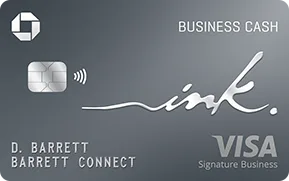
| Ink Business Cash | $0 | 5% on the first $25,000 a year at office supply stores and on internet, cable and phone |
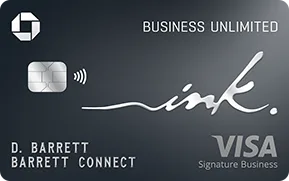
| Ink Business Unlimited | $0 | 1.5% on everything |
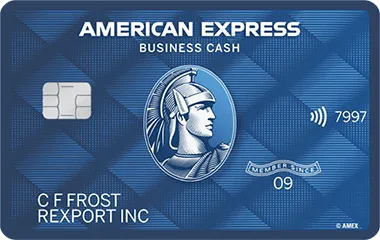
| American Express Blue Business Cash | $0 | 2% on the first $50,000 a year, then 1% |
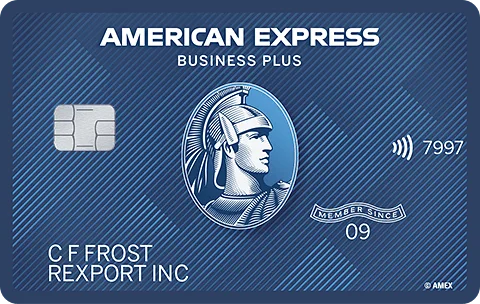
| Blue Business Plus | $0 | 2x Membership Rewards on the first $50,000 a year, worth 1.2% as a statement credit |
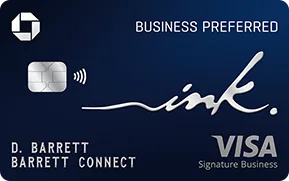
| Ink Business Preferred | $95 | 3x on ads, shipping, phone and travel up to $150,000 a year |
If you’re just starting, a no-fee card makes sense: the welcome offers require $5,000 to $8,000 in spending within three months, which is a lot for a side business. Pick a card whose bonus you’ll reach with real business costs. Our business card list has more options.
The short version
You don’t need to be a company to apply. Use your name, your SSN and your real revenue, even if it’s $0. Then use the card only for the business, and pay it like a personal card, because legally it is your debt.
Cards in this article
Sources
- IRS: Sole proprietorships
- Chase: Business credit cards for sole proprietorships
- Chase: Who can apply for a business credit card?
- Chase: How to fill out a business credit card application
- Chase: Can I use a business credit card for personal expenses?
- Federal Reserve: Report to Congress on the use of credit cards by small businesses
- American Express: Blue Business Cash Card



