Bilt cards review: Blue, Obsidian and Palladium, and earning points on rent
Bilt Blue, Obsidian and Palladium review: points on rent and mortgage with no transaction fee, $0 to $495 annual fees, and how housing points work.
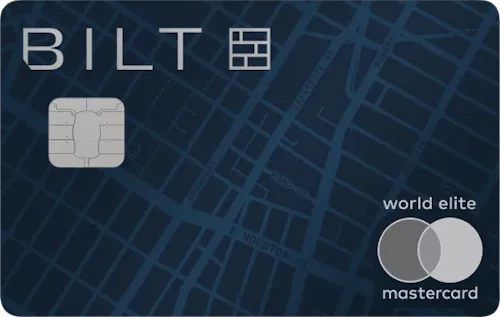
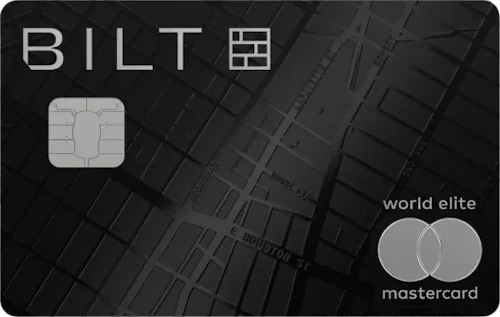
Our verdict: The Bilt cards are worth it if rent or a mortgage is your biggest monthly bill. They earn up to 1.25x points on housing payments with no transaction fee, something almost no other card does. Most people should start with the no-fee Bilt Blue or the $95 Obsidian. The catch: to earn the top housing rate you have to spend as much on the card each month as your rent, and Bilt Points have no fixed cash value.
The three cards at a glance
At the time of writing, Bilt’s pages showed:
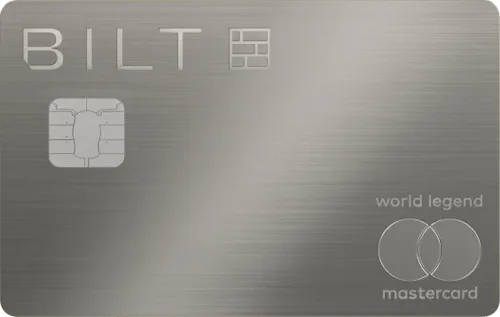
| Bilt Blue | Bilt Obsidian | Bilt Palladium | |
|---|---|---|---|
| Annual fee | $0 | $95 | $495 |
| Welcome offer | $100 Bilt Cash | $200 Bilt Cash | 50,000 points and Gold Status after $4,000 in non-housing purchases in 90 days, plus $300 Bilt Cash |
| Everyday earning | 1x | 3x on dining or grocery (your choice; grocery up to $25,000 a year), 2x other travel, 1x else | 2x on everything |
| Rent and mortgage | up to 1.25x | up to 1.25x | up to 1.25x |
| Yearly credits | none | $100 in Bilt Travel hotel credits (two $50 credits) | $400 in Bilt Travel hotel credits (two $200 credits) and $200 Bilt Cash |
| Foreign transaction fee | none | none | none |
All three also earn more at Bilt partner restaurants (up to 4x, 6x and 5x respectively), on Lyft, and on hotels and flights booked through the Bilt Travel Portal.
The cards are issued by Column N.A. on the Mastercard network and serviced by Cardless. Bilt launched this lineup, which it calls Bilt Card 2.0, on Jan. 14, 2026. The earlier Wells Fargo-issued Bilt card stopped earning rewards after Feb. 7, 2026.
How do you earn points on rent with Bilt?
You pay rent or your mortgage through Bilt, and Bilt charges no transaction fee for it. That matters because, according to a 2023 report from the Consumer Financial Protection Bureau, landlords typically charge a processing fee of two to five percent for credit card rent payments. Housing payments made through Bilt don’t use your credit line, and BiltProtect, which is required for housing payments, pays off the housing charge within 24 hours so it doesn’t build interest.
Bilt then gives you two ways to earn on housing. You can switch between them; changes take effect the following month.
Option 1: points on housing. Your multiplier depends on how much you spend on the card each month, measured against your housing payment:
| Everyday spending as a share of rent | Points on rent |
|---|---|
| At least 25% | 0.5x |
| At least 50% | 0.75x |
| At least 75% | 1x |
| 100% or more | 1.25x |
| Under 25% | 250 points a month |
Under this option, everyday purchases don’t earn Bilt Cash, though welcome and annual Bilt Cash still arrive.
Option 2: Bilt Cash. Everyday purchases earn 4% back in Bilt Cash on top of their regular points. You can spend Bilt Cash on monthly credits with partners, or redeem it for housing points: every $30 of Bilt Cash earns 1,000 points on a housing payment. Bilt’s own example: $60 of Bilt Cash on a $2,000 rent payment earns 2,000 points.
What you earn
Take a renter paying $2,000 a month who puts $2,000 of everyday spending on the Obsidian: $500 on dining, $200 on travel and $1,300 on everything else.
- Dining at 3x: 1,500 points
- Travel at 2x: 400 points
- Everything else at 1x: 1,300 points
- Rent at 1.25x (Option 1, since spending equals rent): 2,500 points
That’s 5,700 points a month, or 68,400 a year, for a $95 fee, plus $100 in hotel credits if you book through Bilt Travel. If the same person spent only $1,000 a month on the card, the rent multiplier would drop to 0.75x: 1,500 points instead of 2,500.
What are Bilt Points worth?
Bilt doesn’t publish a fixed cash value for its points, and the statement credit rate is shown in the app and can change. Most of the value comes from transferring points to Bilt’s airline and hotel partners (Bilt lists more than two dozen) or booking travel through Bilt. Because there’s no fixed cash rate, we don’t put a dollar figure on the example above. Our points valuation method explains why.
Which Bilt card should you get?
- Bilt Blue ($0): for renters who mainly want points on rent and will put little else on the card. Remember that to earn more than 250 points a month on rent, you still need to spend at least 25% of your rent on the card.
- Bilt Obsidian ($95): for renters who eat out or buy groceries. The 3x category is the main reason to pay the fee, and the $100 in hotel credits covers it outright if you book two qualifying stays through Bilt Travel.
- Bilt Palladium ($495): for frequent travelers who want 2x on everything, lounge access through Priority Pass and $600 a year in Bilt credits. Only worth it if you’ll use the hotel credits and Bilt Cash in full.
Who should skip Bilt
- You don’t pay rent or a mortgage. Without housing points, other cards earn more on everyday spending.
- You want cash back. Bilt Points have no fixed cash value; a 2% card such as the Wells Fargo Active Cash is simpler.
- You won’t spend at least a quarter of your rent on the card. Below that, housing earns 250 points a month.
How it compares
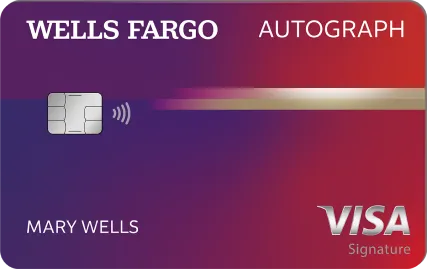
- Wells Fargo Autograph ($0): 3x on dining, travel, gas, transit, streaming and phone plans, with points worth 1 cent in cash. No rent earning.
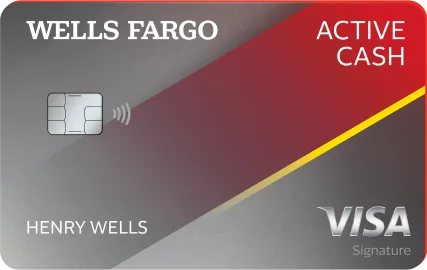
- Wells Fargo Active Cash ($0): 2% cash on everything, but paying rent with it through a landlord’s card processor usually means a fee larger than the rewards.
Should you apply?
Apply for the Obsidian if you pay rent, eat out or buy groceries, and can put roughly your rent’s worth of spending on the card each month; take the Blue if you mainly want fee-free points on rent. If you don’t pay rent or want plain cash back, a flat-rate card like the Active Cash or a category card like the Autograph is the better choice.
 Bilt