What your points are worth: the official cash value of each rewards program
A Chase point is worth 1 cent in cash, an Amex point 0.6 cent, and Hilton publishes no fixed value. The official cash value of each card rewards program.

A card that earns 6x is not automatically better than one that earns 3%. It depends on what a point is worth, and that varies a lot between programs. Some programs publish a fixed rate for turning points into cash or a statement credit. Many airline and hotel programs don’t.
We value points only at the rate their program publishes on its own website. Here is what that rate is for the programs most U.S. cards use, at the time of writing.
Programs with a published cash value
| Program | Value per point | How you get it |
|---|---|---|
| Chase Ultimate Rewards | 1 cent | Cash back as a statement credit or deposit |
| Capital One miles | 1 cent | Statement credit against travel purchases |
| Bank of America points | 1 cent | Statement credit toward travel and dining; cash back on some cards |
| U.S. Bank Altitude points | 1 cent | Deposit to an eligible U.S. Bank account |
| Wells Fargo Rewards | 1 cent | Cash redemption |
| Discover Miles | 1 cent | Cash or a travel statement credit |
| PenFed points | 0.85 cent | PenFed’s guaranteed minimum value |
| American Express Membership Rewards | 0.6 cent | Statement credit against card charges |
| Citi ThankYou | 0.5 cent | Cash back, per Citi’s points-value page (Citi notes values differ by card) |
The gap matters. A 75,000-point bonus is worth $750 at Chase’s 1 cent, but the same number of Amex points is worth $450 as a statement credit.
Programs with no published cash value
Hilton Honors, Marriott Bonvoy, World of Hyatt, IHG One Rewards, United MileagePlus, Southwest Rapid Rewards, American AAdvantage, Atmos Rewards and Bilt don’t publish a fixed rate. Their award prices change with dates, routes and demand.
That doesn’t mean their points are worthless. It means any single number would be a guess. So we don’t put a dollar figure on these cards’ bonuses, and in our rankings they sit after cards we can price. Their card pages say “no fixed cash value” rather than inventing one.
Rates that only work inside one brand
Some programs do publish a fixed rate, but only for their own purchases. Delta’s Pay with Miles, for example, lets Delta American Express cardholders apply miles to Delta flights at 1 cent each. That’s useful if you fly Delta, but it isn’t cash. We show these rates on the card page and leave them out of rankings.
Why we don’t use higher “valuations”
Some points can be transferred to airline and hotel partners, and a well-chosen award can be worth more than the cash rate. But what you get depends on routes, dates and award availability, so no single number describes it. The published cash rate is the value every cardholder can get, any day, without effort. Treat it as the floor. If you use transfer partners well, you’ll do better.
How to use this
- When you compare a points card with a cash-back card, multiply the points rate by the value above. Chase’s 3x on dining is 3% in cash value; Amex’s 4x at restaurants is 2.4% as a statement credit.
- Our card finder and annual fee calculator already do this math for every card.
- Check a card’s page for its program and a link to the official source we used.
Cards in this article
 ChaseChase Sapphire Preferred75,000 points
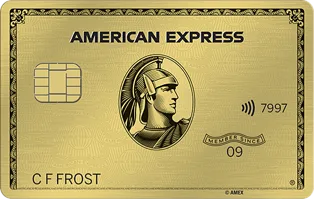 American ExpressAmerican Express GoldUp to 100,000 points
 Capital OneCapital One Venture Rewards75,000 miles
 Capital One
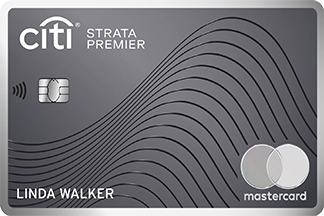 CitiCiti Strata PremierSee Citi for bonus
 Citi
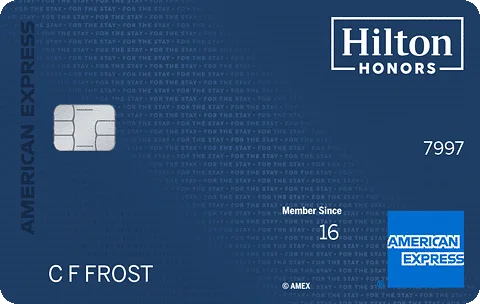 American ExpressHilton Honors American Express Surpass130,000 points
 American ExpressDelta SkyMiles Gold American ExpressAs high as 80,000 miles



