Apple Card review: 2% with Apple Pay, no fees, and what changes with Chase
Apple Card review: 2% Daily Cash with Apple Pay, 3% at Apple and select merchants, 1% with the titanium card, no fees of any kind and no welcome bonus.
Our verdict: Apple Card is a good card if you already pay with your iPhone for almost everything. It earns 2% Daily Cash with Apple Pay, 3% at Apple and a short list of merchants, and charges no annual, late or foreign transaction fees. Skip it if you often pay with a physical card, where it earns just 1%, or if you want a welcome bonus: there isn’t one.
At a glance
At the time of writing, Apple’s page showed:
- Welcome offer: none
- Annual fee: $0, and no late, over-the-limit or foreign transaction fees
- Earning: 3% Daily Cash at Apple and with Apple Pay at select merchants; 2% Daily Cash on purchases made with Apple Pay; 1% Daily Cash with the titanium card
- How rewards arrive: Daily Cash, deposited to Apple Cash or an Apple Card Savings account, or applied as a statement credit if you have neither
- Issuer: Goldman Sachs Bank USA, Salt Lake City Branch; Mastercard network
Where you get 3%
At Apple, and when you pay with Apple Pay at Ace Hardware, Booking.com, ChargePoint, Duane Reade, Exxon Mobil, Hertz, Nike, Uber, Uber Eats and Walgreens. Each merchant has exclusions in Apple’s fine print: Walgreens excludes online gift cards and drive-thru purchases, for example, and Hertz counts only at corporate locations.
Apple Card Monthly Installments let you pay for eligible new Apple products over time at 0% APR, and you still get 3% Daily Cash on the full price up front.
What you earn
Take someone who spends $1,500 a month: $1,000 with Apple Pay at ordinary merchants, $200 with Apple Pay at 3% merchants such as Uber and Walgreens, and $300 with the titanium card at places that don’t take Apple Pay.
- 2% on $12,000: $240
- 3% on $2,400: $72
- 1% on $3,600: $36
- Total: $348 a year
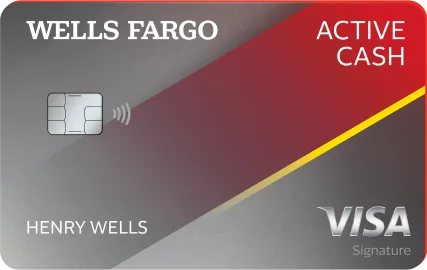
A flat 2% card such as the Wells Fargo Active Cash earns $360 on the same spending, whether you tap your phone or swipe plastic. So Apple Card comes out ahead only when nearly all your spending goes through Apple Pay and a good share lands at the 3% merchants.
Is Apple Card worth it with no fees?
Yes, if Apple Pay is how you already pay, and especially if you travel. Having no fees means more than having no annual fee. A missed payment won’t trigger a late fee (though interest still builds on the balance), and purchases abroad carry no foreign transaction fee. The Wells Fargo Active Cash, by comparison, charges 3%.
The weakness is the 1% rate on the titanium card. Apple’s page lists 1% for titanium card purchases and no higher rate for paying any other way without Apple Pay, so a restaurant that takes your card at the table or a shop without a contactless terminal earns 1%. Our guide to cards that pay more with Apple Pay and other mobile wallets covers where wallet payments work and where they don’t.
Daily Cash and Savings
Daily Cash never expires and arrives as cash, not points, so there’s no conversion rate to worry about. You can send it to Apple Cash, which is provided by Green Dot Bank, or to a Savings account from Goldman Sachs Bank USA, Member FDIC, where it earns interest. Apple calls the account high-yield; check the current rate before you count on it.
Apple Card Family lets two partners share one co-owned credit line, and lets family members 18 and older build their own credit history as participants.
What changes with Chase?
Nothing yet. On Jan. 7, 2026, Apple and JPMorgan Chase announced that Chase will become the issuer of Apple Card, with the transition expected in about 24 months. Apple says cardholders can keep using the card as they normally do, that Mastercard stays as the network, and that benefits including up to 3% Daily Cash, Apple Card Family, Savings and no fees continue. Apple has said it will share more details closer to the switch.
Who should get it
- You pay with Apple Pay for most purchases.
- You want a no-fee card with no foreign transaction fee.
- You buy Apple products and would use 0% monthly installments.
Who should skip it
- You often pay with a physical card. At 1%, that spending earns half of what a flat-rate card pays.
- You want a welcome bonus. The Active Cash offers $100 and the Quicksilver $200.
- You don’t use an iPhone. Without Apple Pay, the card has little to offer.
How it compares
- Wells Fargo Active Cash ($0): 2% everywhere, however you pay, and a $100 bonus after $500, but a 3% foreign fee.
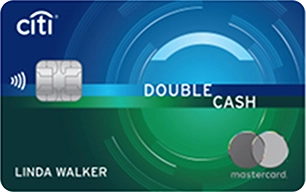
- Citi Double Cash ($0): 2% on everything (1% when you buy, 1% as you pay), no categories to think about.
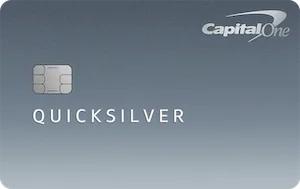
- Capital One Quicksilver ($0): 1.5% everywhere and a $200 bonus after $500, with no foreign transaction fee. A simpler travel card if you don’t live in Apple Pay.
Should you apply?
Apply if almost all of your spending already goes through Apple Pay and you want a no-fee card you can take abroad. If you often pay with plastic, take the Wells Fargo Active Cash for 2% everywhere at home; if you want a no-foreign-fee card that doesn’t depend on your phone, take the Capital One Quicksilver.
 Citi
 Capital One



