Chase Freedom Flex Credit Card vs U.S. Bank Altitude Go Visa Signature Card

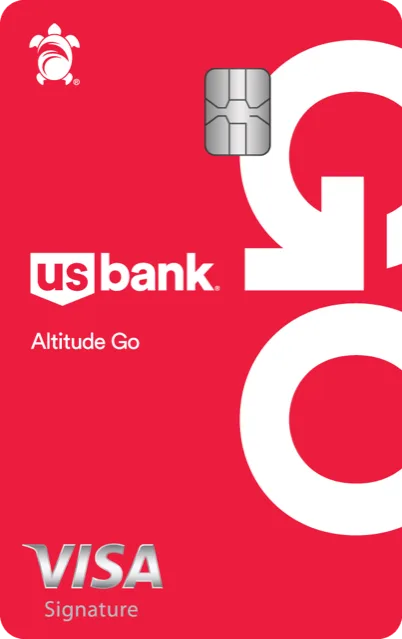
 U.S. Bank
Side by side
| Chase Freedom Flex | U.S. Bank Altitude Go Visa Signature | |
|---|---|---|
| Welcome offer | $200 bonus | 20,000 points |
| Bonus requirement | after $500 spend in 3 months | after $1,000 spend in 3 months |
| First-year value | $200 | $200 |
| Annual fee | $0 | $0 |
| Foreign transaction fee | None | 3% of each foreign transaction |
| Rewards on spending | ||
| Travel | 5% | 1x ≈ 1% |
| Dining | 3% | 4x ≈ 4% |
| Groceries | 1% | 2x ≈ 2% |
| Gas | 1% | 2x ≈ 2% |
| Streaming | 1% | 2x ≈ 2% |
| Drugstores | 3% | 1x ≈ 1% |
| Rotating 5% categories | 5% | 1x ≈ 1% |
| Everything else | 1% | 1x ≈ 1% |
Highlighted cells are the better value. Points and miles are compared at the fixed cash value their program publishes.
Pros and cons
Chase Freedom Flex
- Easy bonus: spend $500 in 3 months
- No annual fee
- No foreign transaction fees
- 5% on up to $1,500 in combined purchases in rotating quarterly categories you activate
- 5% on travel purchased through Chase Travel
- 3% on dining, including takeout and eligible delivery
- 5% categories rotate and must be activated each quarter
- Only 1% outside bonus categories
- Top travel rate only applies when booking through the issuer's travel site
U.S. Bank Altitude Go Visa Signature
- No annual fee
- 4X on dining, takeout and restaurant delivery on the first $2,000 each quarter
- Foreign transaction fee: 3% of each foreign transaction
- Higher rates stop after a yearly spending cap
- Only 1x outside bonus categories
Which one fits you?
Choose Chase Freedom Flex if you want
- lower fees abroad
- more on travel
- more on drugstores
- 5% rotating categories
Choose U.S. Bank Altitude Go Visa Signature if you want
- more on dining
- more on groceries
- more on gas
- more on streaming
Data from Chase and U.S. Bank websites, checked Nov 22, 2026. Chase source · U.S. Bank source