Savor Student Rewards vs U.S. Bank Altitude Go Visa Signature Card

 Capital One
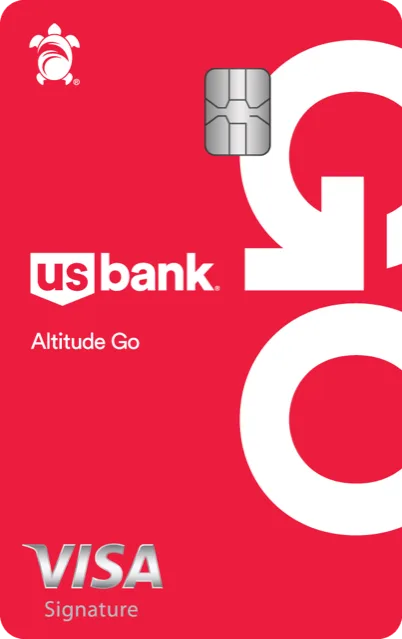
 U.S. Bank
Side by side
| Savor Student Rewards | U.S. Bank Altitude Go Visa Signature | |
|---|---|---|
| Welcome offer | $50 bonus | 20,000 points |
| Bonus requirement | after $100 spend in 3 months | after $1,000 spend in 3 months |
| First-year value | $50 | $200 |
| Annual fee | $0 | $0 |
| Foreign transaction fee | None | 3% of each foreign transaction |
| Rewards on spending | ||
| Dining | 3% | 4x ≈ 4% |
| Groceries | 3% | 2x ≈ 2% |
| Gas | 1% | 2x ≈ 2% |
| Streaming | 3% | 2x ≈ 2% |
| Everything else | 1% | 1x ≈ 1% |
Highlighted cells are the better value. Points and miles are compared at the fixed cash value their program publishes.
Pros and cons
Savor Student Rewards
- Easy bonus: spend $100 in 3 months
- No annual fee
- No foreign transaction fees
- 3% cash back at grocery stores, on dining, entertainment and popular streaming services
- Only 1% outside bonus categories
U.S. Bank Altitude Go Visa Signature
- No annual fee
- 4X on dining, takeout and restaurant delivery on the first $2,000 each quarter
- Foreign transaction fee: 3% of each foreign transaction
- Higher rates stop after a yearly spending cap
- Only 1x outside bonus categories
Which one fits you?
Choose Savor Student Rewards if you want
- lower fees abroad
- more on groceries
- more on streaming
Choose U.S. Bank Altitude Go Visa Signature if you want
- a bigger first-year value
- more on dining
- more on gas
Data from Capital One and U.S. Bank websites, checked Nov 22, 2026. Capital One source · U.S. Bank source