Credit card travel insurance explained: trip delay, cancellation and baggage coverage
How credit card travel insurance works: what trip delay, cancellation and baggage coverage pay on Chase Sapphire cards, and what decides a claim.
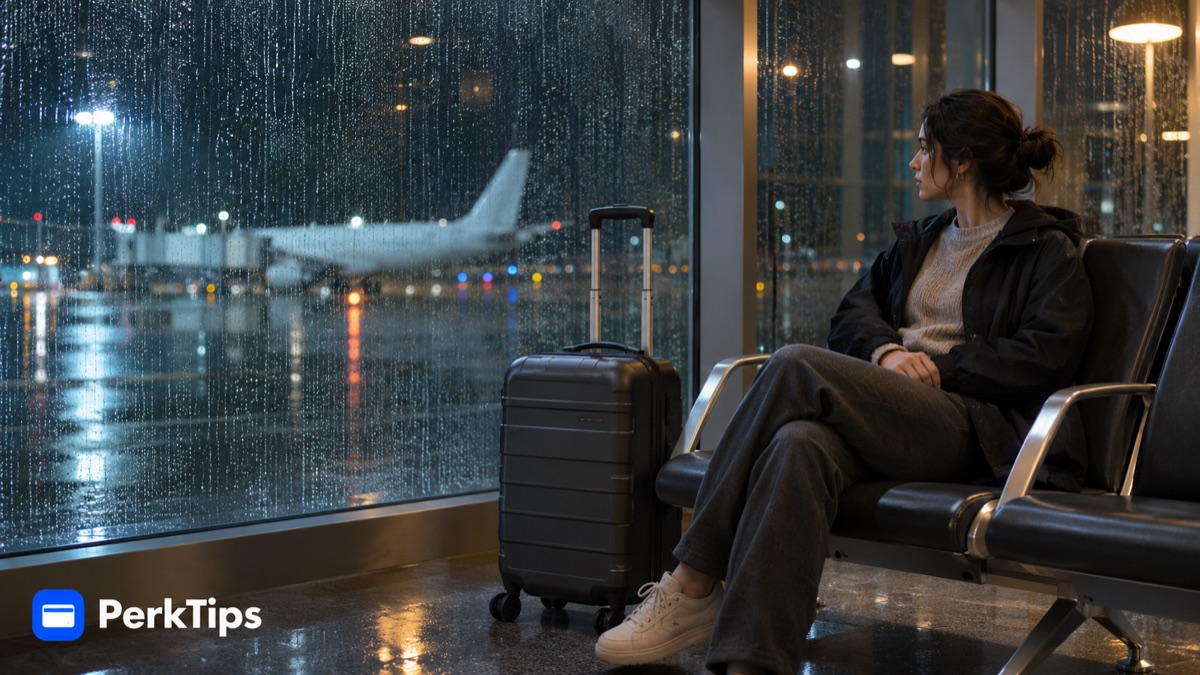
Credit card travel insurance is a set of reimbursements, not a policy you buy. If your flight is delayed overnight, your bag goes missing or you have to cancel for a covered reason, the card’s benefit administrator pays back eligible costs, up to fixed limits. The limits differ a lot between cards. The Chase Sapphire Preferred® Credit Card pays trip delay costs only after 12 hours; the Chase Sapphire Reserve® pays after 6. A no-fee card may cover cancellations and nothing else.
This guide explains each coverage, what it pays on cards that publish their limits, and the conditions that decide whether a claim succeeds.
What does credit card travel insurance cover?
Usually four things: trip cancellation and interruption, trip delay, baggage delay and lost luggage. Premium cards add emergency evacuation and travel accident coverage. Not every card has all of them, and none of them is health insurance for a trip abroad.
Capital One describes the same set on its help pages: trip cancellation and interruption, trip delay, baggage delay, lost luggage and travel accident insurance. It also says plainly that “cardholder benefits vary by card,” which is true at every bank. The only document that settles what your card covers is its Guide to Benefits.
Coverage on three Chase cards
These are the limits each card’s page showed at the time of writing.
| Coverage | Sapphire Preferred ($95) | Sapphire Reserve ($795) | Freedom Flex ($0) |
|---|---|---|---|
| Trip cancellation / interruption | Up to $10,000 per traveler, $20,000 per trip | Up to $10,000 per traveler, $20,000 per trip | Up to $1,500 per traveler, $6,000 per trip |
| Trip delay | Over 12 hours or overnight; up to $500 per traveler | Over 6 hours or overnight; up to $500 per traveler | Not listed |
| Baggage delay | $100 a day for up to 5 days, after 6 hours | $100 a day for up to 5 days, after 6 hours | Not listed |
| Lost luggage | Up to $3,000 per traveler | Up to $3,000 per traveler | Not listed |
| Emergency evacuation | Up to $100,000 | Up to $100,000 | Not listed |
| Travel accident | Up to $500,000 | Up to $1,000,000 | Not listed |
New York residents get lower lost-luggage limits on both Sapphire cards: $2,000 per bag and $10,000 per trip for all covered travelers.
The table shows where the $700 gap in annual fees goes, at least for insurance: the Reserve’s trip delay coverage starts six hours earlier. The cancellation, baggage and evacuation limits are the same.
Trip cancellation and interruption
This pays back prepaid, non-refundable travel costs when a covered event cancels your trip or cuts it short. Chase’s examples are sickness and severe weather. “Covered” is the key word: the Guide to Benefits lists the reasons that qualify, and a reason that is not on the list does not qualify. Read it before you count on the coverage.
Interruption works the same way for a trip already under way. If you must fly home early for a covered reason, the unused prepaid portion can be reimbursed.
Is trip delay insurance worth having?
Yes, if you fly often enough to get stuck. Trip delay pays for meals, lodging and toiletries when a common carrier, such as an airline, train or bus, is delayed past the card’s threshold. On the Sapphire Reserve that is more than 6 hours or an overnight stay; on the Sapphire Preferred it is more than 12 hours or an overnight stay. Both pay up to $500 per covered traveler.
The threshold matters more than the dollar cap. Most delays that ruin a day are in the 6-to-12-hour range, and only the shorter threshold catches them. A delay that pushes you into a hotel overnight qualifies on both cards.
Keep every receipt and ask the airline for a written reason for the delay. Both help when you file.
Baggage delay vs lost luggage
These are two separate benefits.
- Baggage delay covers essentials you buy while waiting for a late bag: clothing, toiletries, a phone charger. Both Sapphire cards pay up to $100 a day for up to 5 days once the bag is more than 6 hours late.
- Lost luggage covers checked or carry-on bags that are lost, damaged or stolen on a covered trip, up to $3,000 per traveler on both Sapphire cards.
Report a lost or damaged bag to the airline before you leave the airport and keep its reference number. Your claim with the card will need it.
The conditions that decide a claim
The limits get attention; the conditions decide the outcome. Check these in your Guide to Benefits before a trip:
- How you paid. Coverage generally applies to trips paid for with the card. A trip charged to a different card may not be covered by this one.
- Who is covered. The cardholder, and on many cards some family members traveling with them. The guide defines who counts.
- Covered reasons. Cancellation coverage lists specific reasons. Anything not on the list is not covered.
- Other coverage pays first. Many card benefits pay only what the airline, a hotel or another insurance policy did not.
- Deadlines. Claims usually must be reported within a set number of days, with documents to follow.
Claims go to a benefit administrator, not to the bank’s customer service line. Capital One lists separate claim contacts for Visa, Mastercard and Discover cards, which shows how much the network and card level matter.
What credit card coverage won’t do
It is not health insurance. On both Sapphire cards, emergency evacuation covers medical services and transportation, up to $100,000, after an injury or illness on a trip 100 miles or more from home that requires evacuation. Ordinary doctor and hospital bills on a trip are outside that benefit. If you need medical coverage overseas, check your own health plan or a travel medical policy.
Limits also apply per traveler and per trip. On the Freedom Flex, for example, a family of five on a $10,000 trip would hit the $6,000 per-trip cap.
Which card should you use for travel?
If you travel a few times a year and want a $95 card, the Chase Sapphire Preferred has the same cancellation and baggage limits as the Reserve, with no foreign transaction fee. If you fly often and delays are your main risk, the Chase Sapphire Reserve covers delays from 6 hours, but its $795 fee only makes sense if you use its other benefits. The Chase Freedom Flex covers cancellations up to $1,500 per traveler for $0, and nothing else on this list.
Capital One’s Venture X also carries travel protections; check its Guide to Benefits for the current limits. For a wider list of cards, see our best travel cards.
Skip choosing a card for insurance alone if you rarely fly or always buy refundable fares. In that case, earning rates and fees matter more than coverage you will not use.




 Capital One



