Credit card statement credits: how they work and how to actually use them
How statement credits on premium cards work: monthly, quarterly and yearly resets, enrollment, up to 8 weeks to post, and how to count what you'd use.

A statement credit is money a card issuer takes off your balance after you make a qualifying purchase. On premium cards, credits are the main way the issuer justifies a high annual fee. The catch is in the details: most credits only cover specific merchants, many reset every month or quarter and are lost if unused, several require enrollment, and they can take weeks to post. A credit is worth its face value only if you’d have spent that money anyway.
How statement credits work
You pay for something with the card. The issuer recognizes the purchase as eligible, usually from the merchant’s transaction data, and posts a credit to your account. You still owe the full purchase until the credit arrives.
Three details trip people up:
- Enrollment. Many credits do nothing until you enroll in your online account. On the American Express Gold Card, the dining, Resy and Dunkin’ credits all require it.
- Timing. Amex’s Gold Card terms say to allow up to 8 weeks after an eligible purchase for a credit to post, and to call if it hasn’t appeared by then.
- Merchant data. If the issuer doesn’t receive information identifying a purchase as eligible, you don’t get the credit. Amex’s terms give examples: a purchase not made directly with the merchant, a gift card, or a restaurant inside a hotel, airport or department store may not count.
Returns matter too. Amex says a credit may not be given, or may be taken back, if the purchase is returned, refunded, canceled or modified.
The four kinds of reset
When a credit resets matters as much as its size.
| Reset | Example | What happens if you skip it |
|---|---|---|
| Monthly | Gold Card dining credit: up to $10 a month at Grubhub, Five Guys, The Cheesecake Factory, Buffalo Wild Wings and Wonder | That month’s $10 is gone |
| Quarterly | Hilton Surpass: up to $50 each quarter at Hilton properties | That quarter’s $50 is gone |
| Semi-annual | Platinum Card hotel credit: up to $300 each half of the year on prepaid Fine Hotels + Resorts or The Hotel Collection bookings | That half’s $300 is gone |
| Yearly | Platinum Card airline fee credit: up to $200 a calendar year for incidental fees from one airline you select | The year’s balance is gone |
Calendar-year credits reset on Jan. 1. Some credits reset on your account anniversary instead, like the Chase Sapphire Preferred’s credit of up to $100 a year on hotels booked through Chase Travel, and the Chase Sapphire Reserve’s $300 travel credit. Know which kind you have before you plan around it.
Some benefits come with conditions before they start. The Delta SkyMiles Gold card’s rideshare credit, up to $10 a month, begins only after your first card renewal.
Uber Cash is different
Uber Cash on the Gold Card ($10 a month) and the Platinum Card ($15 a month plus $20 in December) isn’t a statement credit. It’s loaded into your Uber account once the card is linked. Per the Gold Card terms, you must choose an Amex card as the payment method, the Uber Cash expires at the end of each month, and unused amounts don’t carry over.
How much is a credit really worth?
Count a credit at full value only if it replaces money you’d spend anyway. Count it at zero if you’d have to change your habits to use it. Somewhere in between is honest for most credits.
Take the Platinum Card, with credits that would total $2,694 a year if every one were used in full. A cardholder who already uses Uber weekly, pays at least $25 a month for services on the digital entertainment list and checks bags on one airline might count:
- Uber Cash: $200
- Digital entertainment credit: $300
- Airline fee credit: $200
That’s $700 of credits they’d use without effort, against an $895 fee. Whether the other benefits, such as lounge access, the hotel credit and the lululemon credit, closes the gap depends on how they travel and shop, not on the face value printed on the card’s page.
How to keep track
- Enroll the day the card arrives. Go through the benefits section of your account and enroll in everything you might use.
- Set monthly reminders for monthly credits, and one reminder a month before each quarter or half-year ends.
- Check your statement 8 weeks after a qualifying purchase. If the credit hasn’t posted, call.
- Pay subscriptions with the card that has the credit. A streaming subscription paid with the card covers a monthly credit automatically, but remember it renews automatically too.
- Review once a year before the annual fee posts. If you used less than you expected, ask whether a lower-fee card would do. Our guide to annual fees walks through that decision.
Before you pay a fee for credits
Credits are a discount on things you already buy, not free money. Add up only the ones you’d use without changing your habits, compare that with the fee, and use our annual fee calculator to check the result.
Cards in this article
 American ExpressAmerican Express GoldUp to 100,000 points
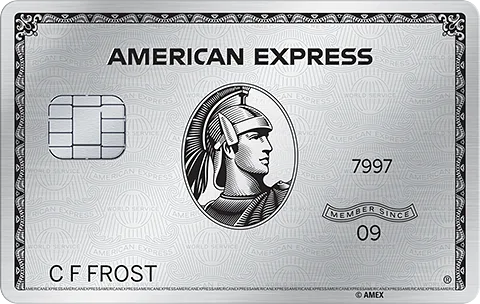 American ExpressPlatinumAs high as 175,000 points
 American ExpressHilton Honors American Express Surpass130,000 points
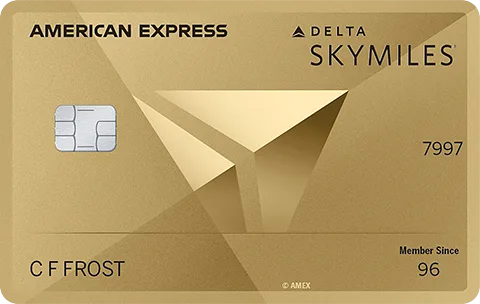 American ExpressDelta SkyMiles Gold American ExpressAs high as 80,000 miles
 ChaseChase Sapphire Preferred75,000 points
 ChaseChase Sapphire Reserve100,000 points



