Chase Freedom Unlimited review: 1.5% on everything, 3% on dining, no fee
Chase Freedom Unlimited review: no annual fee, 1.5% on everything, 3% on dining and drugstores, a $200 bonus. The catch: a 3% foreign transaction fee.
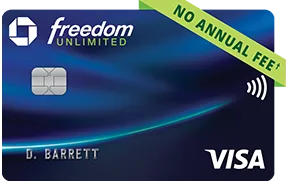
Our verdict: The Chase Freedom Unlimited® Credit Card is a solid no-fee everyday card, especially for someone who eats out: 3% on dining and drugstores, 1.5% on everything else, and a $200 bonus after $500 in three months. Its real strength is pairing with a Sapphire card later. Skip it as a card for trips abroad, because it charges a 3% foreign transaction fee.
At a glance
At the time of writing, per Chase’s product page and pricing terms:
- Welcome offer: $200 after $500 in purchases in the first three months
- Annual fee: $0
- Earning: 5% on travel booked through Chase Travel, 3% on dining (including takeout and eligible delivery), 3% at drugstores, 1.5% on everything else
- Reward value: cash back is tracked as Ultimate Rewards points, 100 points per $1, so 1 cent each
- Intro APR: 0% for 15 months from account opening on purchases and balance transfers, then a variable APR; a balance transfer fee applies
- Foreign transaction fee: 3% of each transaction in U.S. dollars
What you earn
Take someone who spends $400 a month on dining, $100 at drugstores and $1,500 on everything else.
| Spending | Per year | Rate | Back |
|---|---|---|---|
| Dining | $4,800 | 3% | $144 |
| Drugstores | $1,200 | 3% | $36 |
| Everything else | $18,000 | 1.5% | $270 |
| Total | $24,000 | $450 |
That’s about 1.9% across all spending, with no fee to subtract. The $200 welcome offer comes on top in the first year. Book travel through Chase Travel and those purchases earn 5%, though you should compare the price with booking directly.
Chase’s program agreement says there’s no minimum to redeem for cash, and points stay valid as long as the account is open.
Is there an annual fee or a catch?
No annual fee. The catches are smaller:
- 3% foreign transaction fee. Every purchase abroad, or online from a merchant outside the U.S., costs 3% extra, which wipes out the 1.5% you earn.
- 1.5% isn’t the top flat rate. Some no-fee cards pay 2% on everything. Freedom Unlimited only wins when dining and drugstores make up a good share of your spending.
- The 0% intro APR ends. After 15 months the regular variable rate applies to any balance left.
The card also carries purchase protection (up to $500 per item for 120 days against damage or theft), an extra year on eligible U.S. manufacturer warranties, trip cancellation coverage up to $1,500 per traveler and $6,000 per trip, and secondary rental car coverage in the U.S. Each has conditions in Chase’s benefit guide.
Why it pairs well with a Sapphire card
Freedom Unlimited earns Chase Ultimate Rewards points. On its own, they’re worth 1 cent each. But Chase lets you move points to another Ultimate Rewards card you hold, or one held by a member of your household. If you also have a Sapphire Preferred or Sapphire Reserve, you can move Freedom Unlimited points there and use them for Points Boost bookings in Chase Travel or transfers to airline and hotel partners. Our guide to how to redeem Chase points shows when that beats cash.
That makes Freedom Unlimited a sensible first Chase card even if you might want a travel card in a year or two. The points you earn now aren’t stuck at 1 cent.
Who should get it
- You want one no-fee card for everyday spending in the U.S.
- Dining is one of your bigger categories.
- You have, or plan to get, a Sapphire card and want to pool points.
Who should skip it
- You travel abroad or shop on foreign websites. The 3% fee makes it a poor choice; carry a card with no foreign transaction fee for those purchases.
- You want the highest flat rate. A 2% card returns more on spending outside dining and drugstores.
- You’ll carry a balance after the intro period. Rewards don’t make up for interest.
How it compares
- Wells Fargo Active Cash ($0): 2% on everything and a $100 bonus after $500 in three months. On our example it returns $480 a year, $30 more, but its points can’t be pooled with a Sapphire card. It also charges a 3% foreign fee.
- Chase Freedom Flex ($0): 5% on up to $1,500 a quarter in rotating categories you activate, the same 3% on dining and drugstores, but 1% on everything else. It has no foreign transaction fee.
- Chase Sapphire Preferred ($95): 3x on dining, 2x on other travel, no foreign fee and transfers to partners. Better if you travel; worse for everyday spending outside dining and travel, which earns 1x.
Should you apply?
Apply if you want a no-fee card for everyday U.S. spending, eat out regularly, and like the option of pooling points with a Sapphire card later. If you’d rather have the simplest flat rate and never think about points, take the Wells Fargo Active Cash instead. If you’re willing to activate categories each quarter and want a card with no foreign fee, the Freedom Flex is the better no-fee Chase card.